
Responsible business needs more than good intentions. It needs priorities, ownership and evidence.
Practical Sustainability & ESG support for SMEs that want to understand what matters, establish clear responsibilities, measure meaningful performance and communicate progress credibly, without building a corporate reporting machine they do not need.
Energy, carbon, waste, resources, environmental risk and improvement.
Health & Safety, workforce practices, capability, community and impact.
Ownership, ethics, policies, objectives, suppliers, evidence and oversight.
Start with what the business already does. Existing QHSE systems, ISO arrangements, operational data and responsible-business activity can often provide much of the foundation before anything new is created.
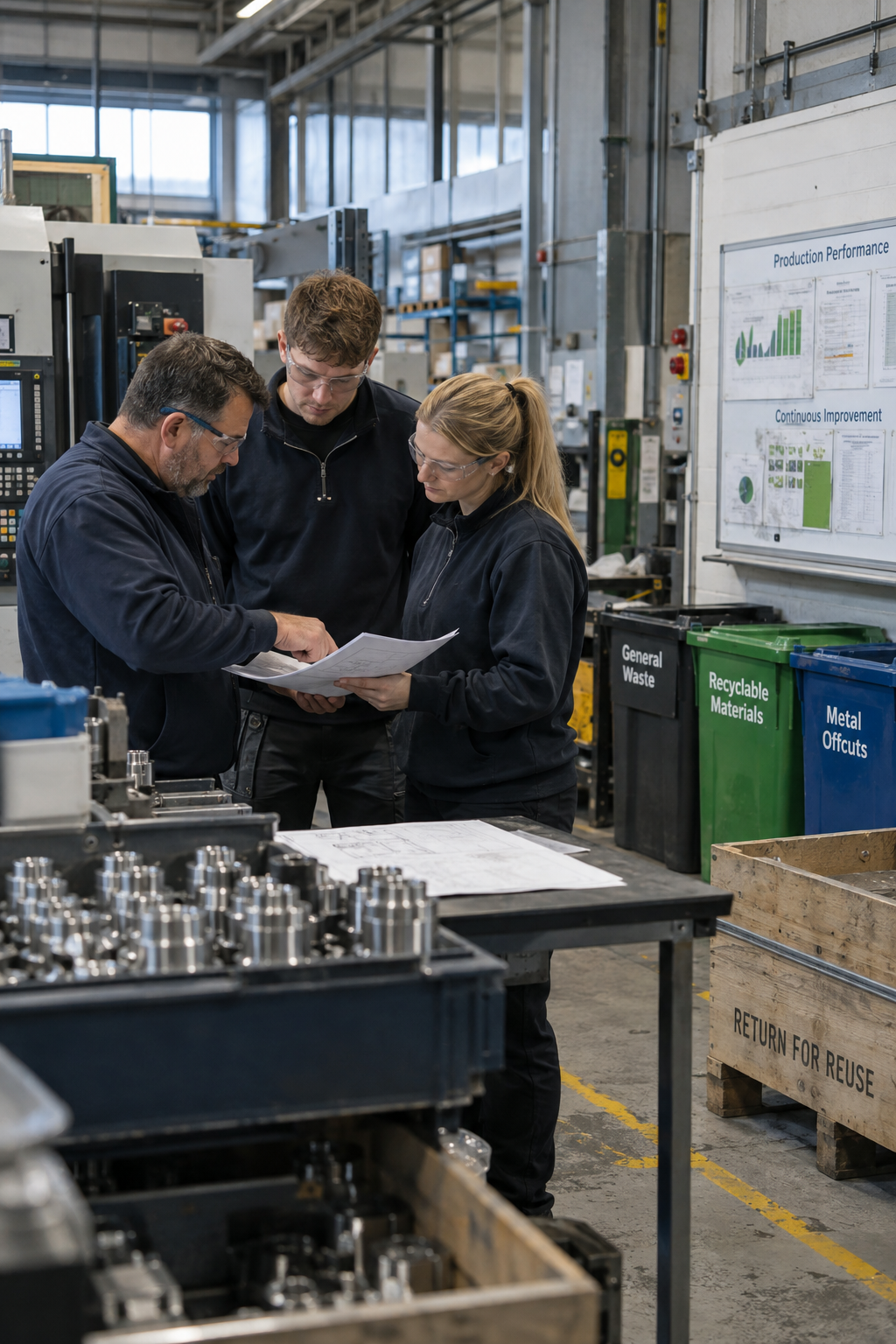
ESG sounds broad. The practical questions aren't.
Strip away the terminology and ESG is about understanding the impact the business has, the responsibilities it carries and whether it can demonstrate that responsible decisions are actually being made.
What impact are we creating?
Understand it. Control it. Reduce it.How the business uses energy, materials and natural resources, what waste and emissions it creates, and how environmental risks and improvement opportunities are being managed.
How are people affected?
Protect people. Build capability. Contribute responsibly.How the organisation looks after employees, develops people, manages Health & Safety, treats others fairly and contributes to the communities and relationships around the business.
Who owns it, and can we prove what we say?
Set expectations. Assign ownership. Evidence progress.The management arrangements behind responsible business: policies, ethics, responsibilities, objectives, supplier expectations, oversight, evidence and transparent decision-making.
You're probably already doing more ESG than you think.
Risk assessments, ISO systems, energy monitoring, waste controls, employee training, supplier approval, charity activity and management objectives can all form part of the picture. The first job is often connecting what already exists before creating something new.
ESG doesn't need to begin with a glossy report. For an SME, a better starting point is understanding what matters, deciding who owns it and getting reliable information behind the claims the business wants to make.
Why has ESG suddenly landed on your desk?
Most SMEs don't begin because somebody decided the business needed an ESG programme. Usually there is a more immediate trigger: a customer request, tender, assessment, commercial opportunity or a growing need to explain what the business is already doing.
Procurement is asking about carbon, environmental management, workforce practices, policies, suppliers and ESG performance, but the information currently sits across several parts of the business.
The business can describe some worthwhile activity but needs clearer policies, responsibilities, objectives and evidence behind the claims being included in the bid.
A customer or supply-chain requirement has introduced a formal sustainability assessment and the business needs to understand what is being assessed, what evidence exists and where the real gaps are.
Charity support, employee activity, environmental commitments and responsible-business initiatives exist, but they lack a shared structure, objectives or a credible way to demonstrate impact.
Energy, fuel, waste and purchasing data may already exist, but the business needs to understand what information is reliable, who owns it and where specialist carbon support may be required.
The business wants to show customers, employees and stakeholders what it is working on, while keeping claims proportionate, evidence-based and clear about what remains to be improved.
Don't build six different answers to six different requests.
Customer questionnaires, tenders, EcoVadis and responsible-business reporting often draw from the same underlying policies, controls, objectives and performance information. A better ESG system gives the business one stronger source of evidence that can be reused for different requests.
Build the framework. Then make it useful.
ESG support should not begin with a report template. DBIM starts by understanding why the business needs ESG, what already exists and which issues actually matter, then builds a proportionate system around those priorities.
Why does ESG matter here?
Define the commercial or responsible-business reason for doing the work before deciding what the business needs to measure or report.
Decide what matters.
Review environmental, social and governance issues and focus effort on the areas that genuinely matter to the business and its stakeholders.
Give it ownership.
Connect existing management arrangements and establish clear responsibilities, expectations, objectives and improvement actions.
Know what is changing.
Identify practical indicators and establish reliable sources of data so progress can be demonstrated rather than described vaguely.
Say what you can prove.
Turn the underlying system and evidence into clear responses for customers, tenders, assessments and responsible-business communication.
Keep moving it forward.
Review performance, close evidence gaps, strengthen controls and update the priorities as the business, customers and expectations change.
One evidence base. More than one use.
A strong ESG framework should help the business answer more than one customer questionnaire. The same controlled information can support tenders, EcoVadis, CSR reporting, customer assurance and internal improvement without recreating the story each time.
The aim is not to make an SME behave like a listed company. It is to give responsible-business activity enough structure that people know what matters, who owns it, how progress is measured and what evidence sits behind the claims being made.
Talk to DBIM →A claim needs something behind it.
Good ESG information connects what the business says it will do, what it actually does, what changes as a result and what evidence can demonstrate that activity. Without that connection, reporting quickly becomes a collection of unsupported statements.
What have we said we'll do?
Set the expectation.Establish the business's direction, principles and intended outcomes before deciding which evidence to collect.
What are we actually doing?
Put the commitment into practice.Identify the operational controls, programmes and improvement work that turn sustainability intentions into real business activity.
Is anything changing?
Turn activity into performance information.Select indicators that show whether the activity is delivering useful progress rather than measuring something simply because the data happens to exist.
Can we demonstrate it?
Keep something credible behind the claim.Maintain controlled records that explain where the information came from, what period it covers and how the business knows it is reliable.
kWh by site, process or reporting period.
Equipment upgrades, operating controls or improvement actions.
Utility bills, meter readings, actions and performance review.
Completion, competence or development indicators.
Formal training, workplace coaching and development activity.
Matrices, certificates, attendance records and competence reviews.
Proportion of relevant suppliers screened or reviewed.
Approval criteria, standards and responsible procurement checks.
Supplier questionnaires, approvals, reviews and improvement actions.
If you make the claim, could you show how you know?
Saying “we reduce our environmental impact” is very different from being able to show the objective, improvement activity, energy or waste trend, ownership and review behind that statement. The second version is far more useful when a customer, tender or assessment asks for evidence.
Measure what helps the business understand performance. You do not need dozens of ESG KPIs because a reporting template contains them. A smaller set of controlled, relevant measures is usually more valuable than a large dashboard nobody trusts or uses.
Don't build ESG beside the business. Connect it to what already exists.
A business with ISO systems, QHSE arrangements, supplier controls and operational data may already hold much of the information needed. DBIM's role is to connect those existing systems into a clearer Sustainability & ESG framework rather than duplicate them.
Governance, objectives, suppliers, processes, audits and improvement.
→ Existing system ISO 14001Environmental impacts, compliance, controls, objectives and performance.
→ Existing system ISO 45001Health & Safety risk, participation, competence and worker protection.
→Sustainability & ESG
Bring together the information that matters, establish ownership and create one controlled foundation for responsible-business performance and evidence.
Incidents, training, audits, objectives, actions and performance trends.
Community, charity, workforce and wider responsible-business activity.
→ External assessment EcoVadisA structured route for demonstrating sustainability management and evidence.
→A management system can do more than one job.
Environmental objectives from ISO 14001, employee participation from Health & Safety, supplier controls from Quality and existing management-review information can all support ESG. There is little value in recreating those arrangements inside a separate sustainability system simply to give them another label.
Collect the information once. Control it properly. Reuse it appropriately. That keeps ESG proportionate for an SME and reduces the repeated scramble every time a different customer asks a slightly different sustainability question.
Talk to DBIM →Built from operational experience. Not just ESG terminology.
DBIM's Sustainability & ESG approach builds on practical experience across manufacturing, environmental management, Health & Safety, integrated ISO systems, continual improvement and sustainability assessment. That matters because responsible business eventually has to work inside the real operation.
Manufacturing
Understanding how environmental, people and governance requirements interact with real production demands, resources, suppliers and everyday decisions.
Environmental management
Practical experience managing environmental impacts, compliance, objectives, controls and improvement within operational businesses.
Integrated ISO
Experience bringing Quality, Environmental and Health & Safety management into one coherent system rather than maintaining parallel frameworks.
Gold EcoVadis experience
First-hand experience contributing to sustainability management arrangements and evidence associated with Gold EcoVadis performance.
Continual improvement
Using objectives, actions, performance information and root-cause thinking to move responsible-business activity beyond policy statements.
Start with the management system behind the claim.
Sustainability evidence is strongest when it comes from arrangements the business genuinely uses. DBIM focuses on ownership, controls, objectives, reliable data and improvement first, then helps organise those elements into a clearer ESG story.
Priorities, responsibilities, policies, objectives, ESG measures, evidence architecture, customer requests, EcoVadis readiness, responsible-business activity and improvement planning.
Formal greenhouse-gas inventories, independent assurance, specialist regulatory reporting or other technically specialised work should be delivered with appropriately competent specialist support where the assignment requires it.
Credibility comes from knowing where the boundary is as well. DBIM's role is to strengthen the practical management framework and bring the right specialist expertise into the picture when the assignment goes beyond that scope.
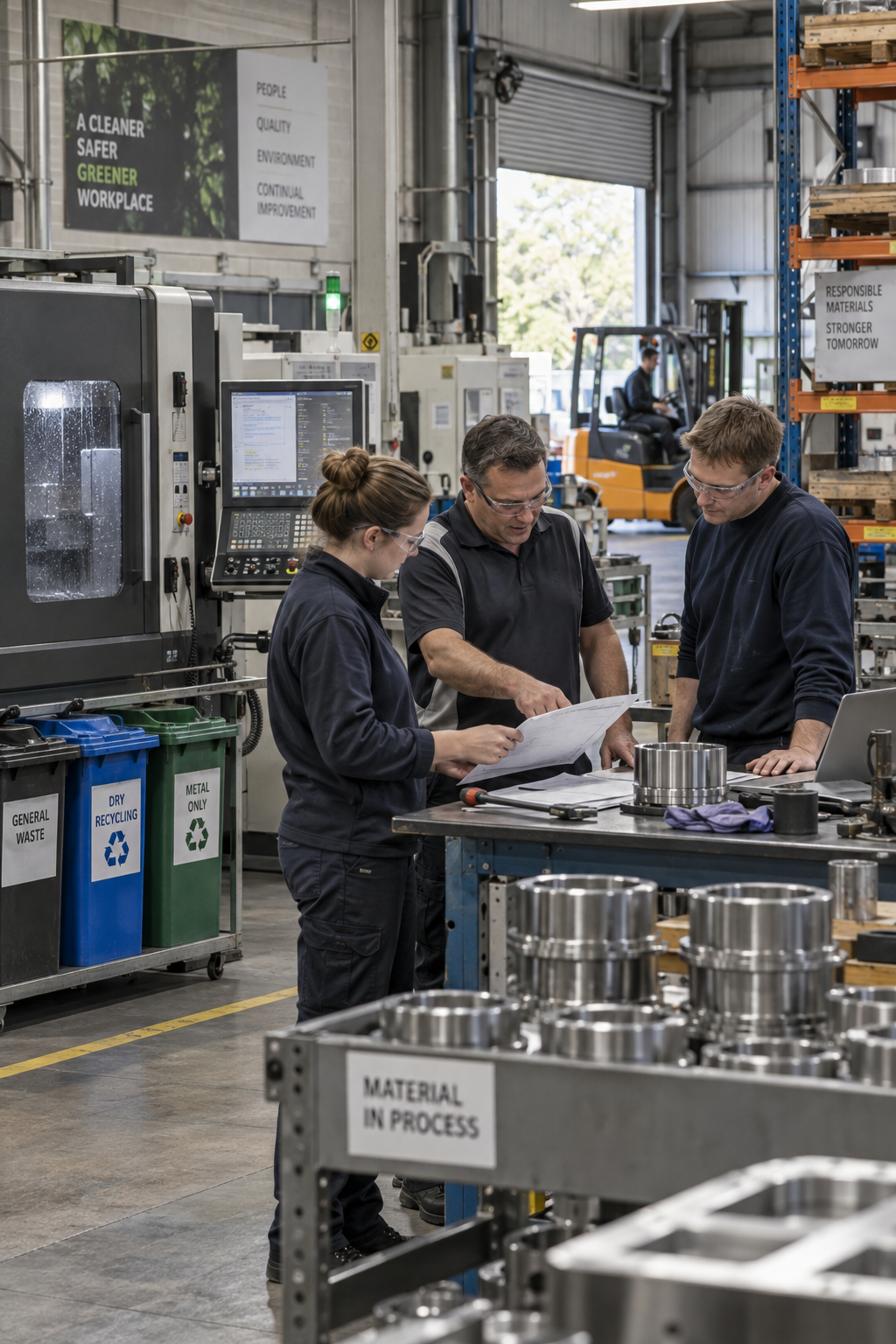
What kind of sustainability support do you actually need?
Not every business needs a full ESG programme. Some need a clearer management framework, some have been asked to complete an assessment, and others want to organise existing responsible-business activity. Start with the outcome, then choose the proportionate support.
Build the framework behind responsible business.
Priorities. Ownership. Measures. Evidence. Improvement.For SMEs that need a more structured approach to environmental, social and governance performance without creating an unnecessarily complex corporate reporting system.
EcoVadis Assessment Support
Strengthen the system behind the submission.For businesses completing EcoVadis for the first time or using an existing scorecard to identify evidence gaps and improvement priorities.
Explore EcoVadis support →CSR & Responsible Business
Turn good activity into a coherent approach.For businesses that want to bring together community, workforce, charity, environmental and responsible-business commitments and demonstrate the impact more clearly.
Explore responsible business →Need to focus specifically on environmental performance? Review energy, waste, resources, environmental risks, objectives and operational improvement before deciding whether broader ESG support is needed.
Environmental support →Start with the reason it's become important.
You do not need to decide which sustainability service to buy before speaking to DBIM. Bring the customer request, tender question, EcoVadis invitation, existing ESG activity or internal ambition and we can identify a proportionate starting point.
Talk to DBIM →Start with what you already have.
A customer request, tender question, EcoVadis invitation or desire to formalise responsible business does not mean starting again. Bring the requirement and the existing arrangements. DBIM can help identify what is useful, what is missing and what genuinely needs to change.
Bring the requirement. We'll start there.
You do not need a finished ESG strategy before speaking to DBIM. The first conversation is about why sustainability has become important and what the business already has in place.
Responsible business should be credible, proportionate and useful. The objective is not to create the appearance of an ESG programme. It is to strengthen the underlying arrangements so customers, employees and the business itself can see meaningful progress.