
Keep people moving.
Keep products moving.
Keep risk under control.
Practical QHSE support for busy warehouse and distribution operations where movement never really stops.
DBIM supports warehouses, distribution centres and operational logistics businesses with Health & Safety, ISO, environmental management and ongoing QHSE improvement. The focus is practical control across people, vehicles, stock, storage and the pressures of keeping goods moving.
Built around operational reality. Good controls need to work when forklifts are moving, vehicles are arriving, orders are building and the warehouse is under pressure.
A warehouse rarely stands still.
Goods arrive, orders build, forklifts move, people pick, vehicles reverse and drivers come and go.
Throw in changing stock profiles, temporary workers and peak periods and the risk picture can change quickly.
The challenge isn't stopping the movement. It's controlling how people, vehicles, products and equipment interact while the operation keeps moving.
Workplace transport
Traffic routes, pedestrian segregation, reversing, visibility, crossings and vehicle movements.
FLTs & MHE
Operator competence, authorisation, equipment condition, attachments and safe operating arrangements.
Racking & storage
Loading, damage, inspections, pallet condition, protection and changing storage arrangements.
Loading & unloading
Bays, trailers, dock equipment, vehicle movement, falls and interaction with visiting drivers.
Manual handling
Picking, packing, palletising, pushing, pulling, repetitive work and awkward or heavy products.
Work at height
Mezzanines, loading bays, ladders, maintenance activities and unsafe access to stored goods.
Start with the flow of the operation. Understand where people, vehicles and goods interact, then build controls around the way the warehouse actually works rather than forcing a generic safety system onto it.
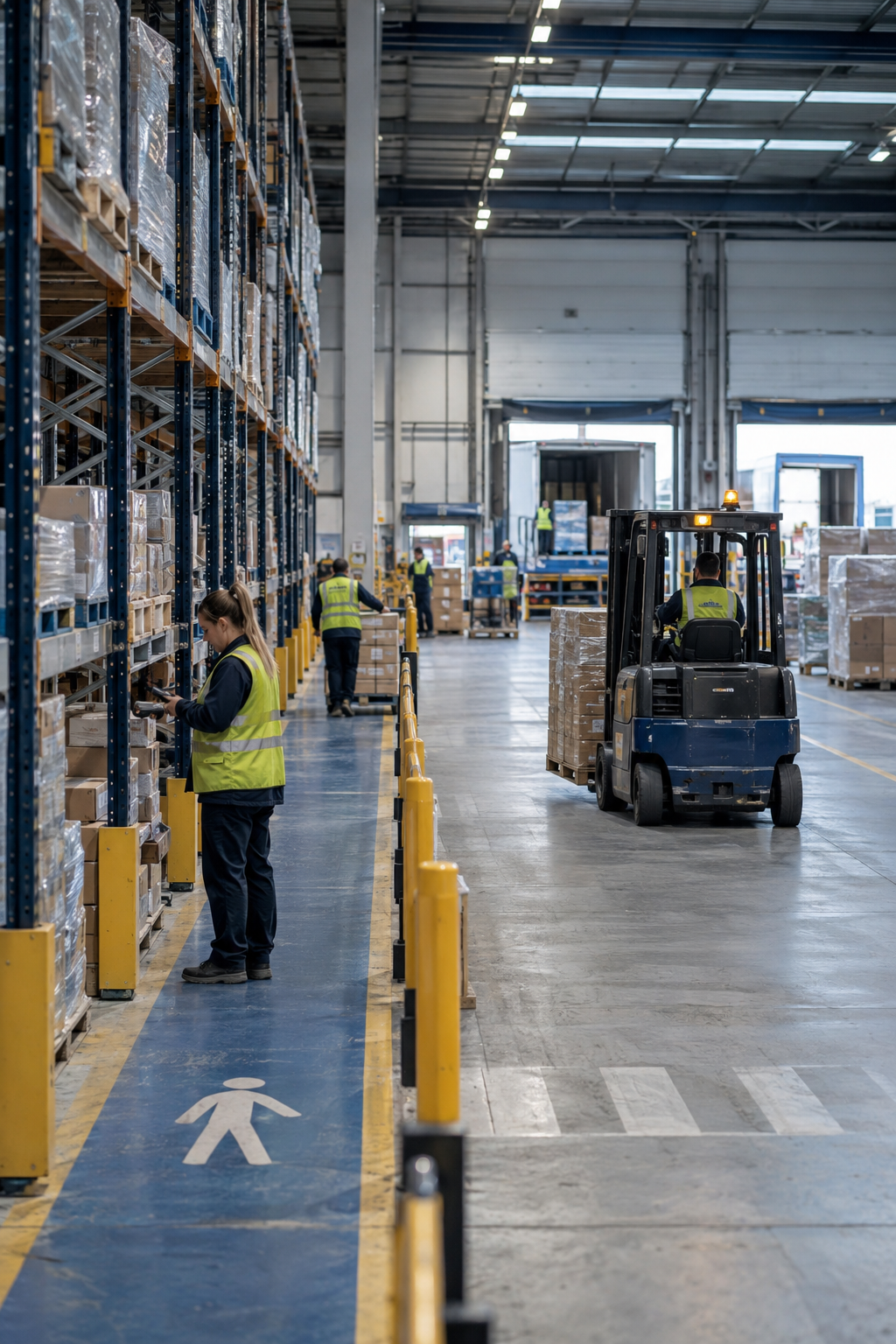
People and vehicles need more than painted lines between them.
Forklifts, delivery vehicles, pedestrians, loading activity and visiting drivers can all need access to the same operation.
Floor markings have a role, but effective workplace transport control is wider than that. Routes, physical separation, vehicle condition, competence, supervision and changing operational conditions all matter.
Separate
Keep pedestrians and moving vehicles apart wherever reasonably practicable using layout, barriers, gates and dedicated routes.
Control
Manage crossings, reversing, speed, visibility, parking, access points and high-interaction areas.
Operate
Use suitable vehicles and equipment with trained, competent and appropriately authorised operators.
Supervise
Make sure the agreed standards remain the normal way of working, particularly during peak periods and unusual operations.
Review
Reassess arrangements when layouts, stock, equipment, traffic volumes or operating patterns change.
A forklift certificate isn't the whole control system.
Operator competence matters, but so do the truck, the task and the environment. Selection, authorisation, pre-use checks, defects, maintenance, attachments, loads, routes and supervision all form part of safe lift-truck operation.
Visiting drivers need to understand the system too. Site rules only work when employees, contractors and drivers arriving for the first time can understand where to go, where to wait and how loading arrangements work.
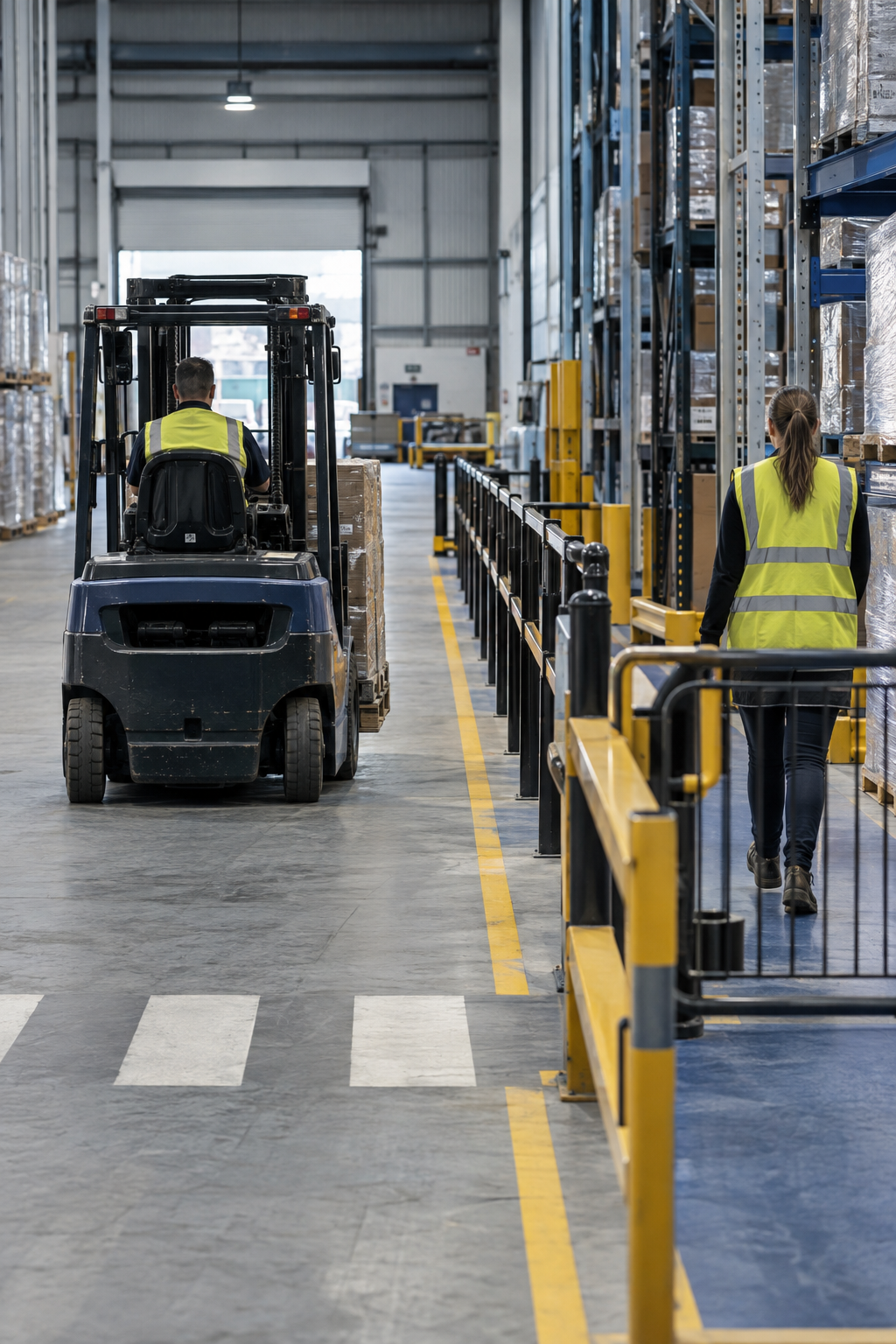
Safe storage is about more than putting things on a rack.
Racking, pallets, goods, picking activity and access equipment all change as an operation develops. The storage system needs managing throughout its life, not simply checking once a year.
Store
Use suitable storage arrangements, understand load limits and make sure goods and pallets are appropriate for the system.
Protect
Reduce the likelihood of vehicle impacts through layout, protection and sensible interaction between MHE and storage.
Inspect
Give people a clear way to identify, report and respond to damaged racking, pallets and storage equipment.
Handle
Reduce unnecessary lifting, carrying, pushing and pulling through better layout, equipment and task design.
Access
Provide safe access where work at height cannot be avoided. Racking itself should not become improvised access equipment.
Change
Review storage arrangements when stock, pallets, loads, layout, equipment or operational volumes change.
Damage needs a route from discovery to action.
The important part isn't simply having an inspection. People need to know what damage looks like, how to report it, who evaluates it and what happens next. Repairs, alterations and technical decisions should then be handled by appropriately competent providers.
Training isn't the first control. Start by asking whether lifting, carrying, pushing or pulling can be avoided, mechanised or redesigned before relying on technique alone.
Specialist racking expertise still has its place. DBIM can help establish practical reporting, inspection and management arrangements, while technical rack design, structural evaluation and specialist inspection should be carried out by appropriately competent specialists where required.
From one warehouse problem to the whole QHSE system.
You might need help with workplace transport today and a wider management-system problem tomorrow. DBIM can work at both levels, with support matched to what the operation actually needs.
Health & Safety
Practical support with workplace transport, FLTs, storage, loading, handling, inspections, incidents and the everyday arrangements needed to keep warehouse risk under control.
ISO Management Systems
Build, integrate or improve ISO 9001, ISO 14001 and ISO 45001 around the same operation rather than running three separate systems alongside it.
Environmental & Sustainability
Understand and improve the environmental impact associated with waste, packaging, energy, transport, fuel, purchasing and the wider operation.
Fractional QHSE Support
Add experienced QHSE capability to the business without immediately recruiting another full-time senior role. Useful where systems, actions or improvement work need somebody to help drive them forward.
Competent Person Advice Line.
If your warehouse manages health & safety internally but sometimes needs competent advice, you may not need ongoing hands-on consultancy.
The DBIM Competent Person Advice Line provides ongoing access to competent H&S advice plus an annual Health & Safety Health Check.
The level of support should match the problem. We won't turn an advice question into a consultancy project unnecessarily. Equally, if something needs deeper technical work or hands-on implementation, we'll explain that clearly.
Safety, quality and efficiency should pull in the same direction.
A warehouse doesn't experience Quality, Environment and Health & Safety as three separate businesses. The same people, processes, equipment and decisions affect all three.
Quality.
Deliver consistently.Control customer requirements, stock accuracy, picking, damaged goods, supplier performance, errors and corrective action.
Environment.
Reduce the impact.Manage energy, waste, packaging, transport, fuel, purchasing, environmental obligations and improvement objectives.
Health & Safety.
Move safely.Control workplace transport, storage, handling, loading, work equipment, contractors and worker involvement.
One operation. One management system.
The warehouse team shouldn't need three different ways of managing actions, competence, change, audits or improvement. Build common processes once, then use them across Quality, Environment and Health & Safety.
Slower movement + increased risk
Damage + downtime + injury potential
Rework + returns + wasted movement
Waste + customer issues + commercial cost
Good QHSE should remove operational friction, not create it. Better controls should help the warehouse become safer, more consistent and easier to manage at the same time.
The real test isn't audit day. It's peak period.
Procedures and inspections matter, but culture shows up when orders are backing up, temporary workers are on shift and vehicles are waiting at the loading bays. That's when the normal standards either hold or start getting traded for speed.
Compliance
Legal requirements, assessments, inspections, training and essential controls are understood and in place.
Control
Vehicle movements, storage, handling and operational risks are actively managed rather than simply documented.
Consistency
The same standards survive different shifts, peak periods, agency labour and changing operational pressure.
Ownership
Warehouse managers, supervisors, operators and drivers understand their responsibilities and act without waiting to be told.
Culture
Doing things properly becomes part of getting the operation moving, rather than something seen as slowing it down.
What happens when the warehouse gets busy?
Strong systems should still work when the easy option is to bypass them. A good culture doesn't remove operational pressure. It changes what people are prepared to compromise when that pressure arrives.
Culture isn't built through posters or another toolbox talk alone. DBIM focuses on the practical conditions behind it: leadership, competence, involvement, supervision, reporting, follow-through and whether the arrangements people are expected to follow actually work.
Built for operational SMEs.
DBIM works best with warehouse and distribution businesses where QHSE matters operationally and commercially, but the organisation doesn't necessarily need a large permanent internal QHSE team.
Goods are being received, stored, picked, moved and dispatched as part of the normal operation.
Forklifts, MHE, delivery vehicles, pedestrians and visiting drivers create regular interaction.
Health & Safety, Quality or Environmental responsibility may sit with Operations, Warehouse, Transport or another manager.
Your systems need to demonstrate control as well as support the operation day-to-day.
The operation has changed faster than the processes, responsibilities or controls around it.
We understand that the warehouse still needs to move product while controls are being improved.
People, stock, vehicles and information all interact. We look at how those flows affect the risk.
Operators and supervisors often know where the practical weaknesses are before a procedure does.
Documentation should improve control, consistency or evidence, not simply make the management system larger.
The aim is to strengthen your internal team, not create permanent reliance on an external consultant.
Good advice includes recognising when engineering, technical or specialist inspection expertise is required.
Operational businesses that want practical improvement without building unnecessary bureaucracy. Business size matters less than the complexity of the operation, the risks involved and the capability already available internally.
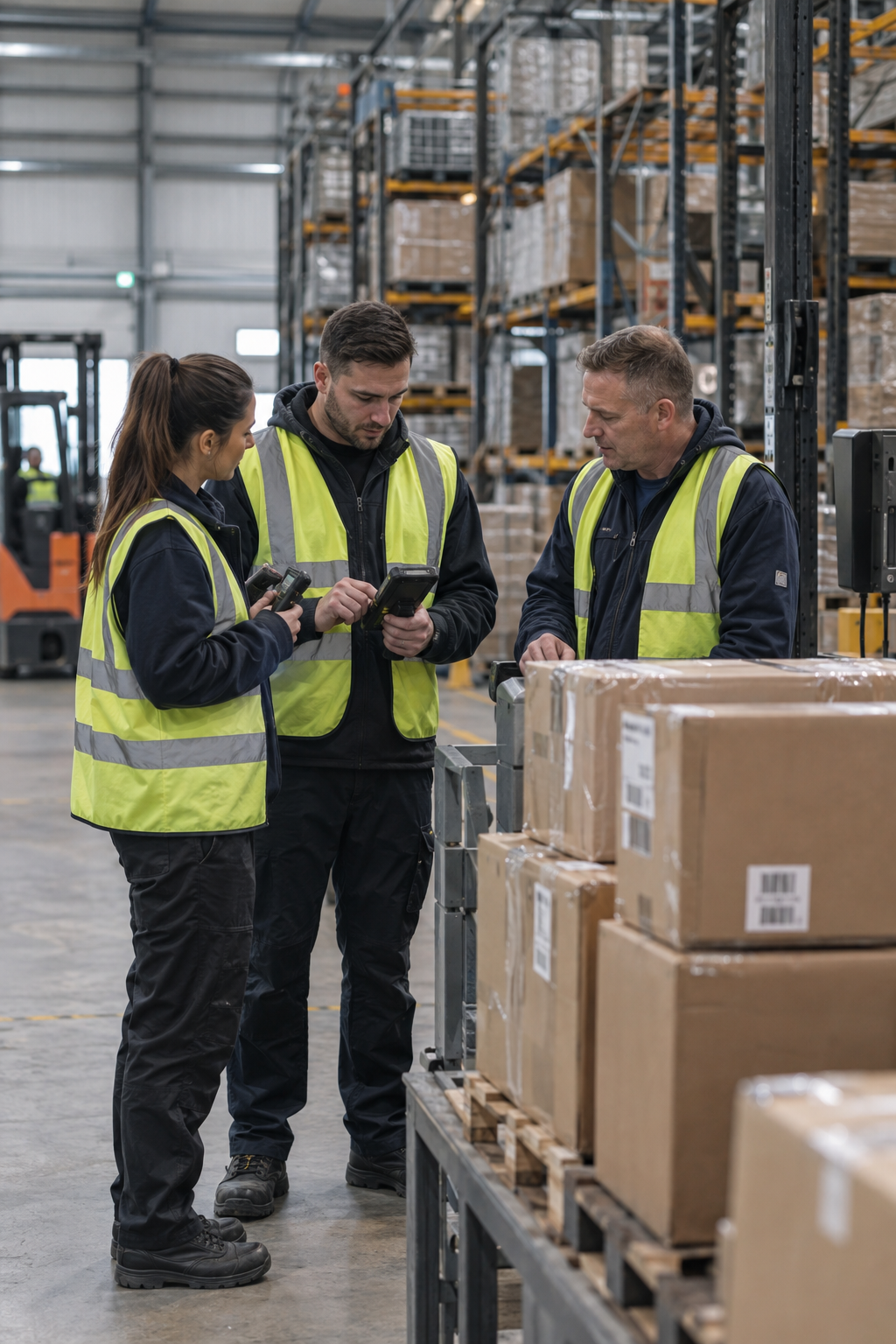
Tell us what's moving through your operation.
People, forklifts, vehicles, stock, orders or a QHSE system that's struggling to keep pace.
Tell us what's happening, what's causing concern or what you're trying to improve. We'll give you a practical view of where we'd start and whether DBIM is the right fit.
Talk to DBIM →No hard sell. No unnecessary consultancy. Just a straightforward conversation about what your warehouse or distribution operation actually needs.