

Practical QHSE and ISO support built around how your business actually works.
Practitioner-led support for UK SMEs that need stronger Health & Safety, usable ISO management systems, competent advice or additional QHSE capacity, without unnecessary complexity.
Understand the operation first. Then identify what needs controlling, what needs systemising and where improvement will make the greatest difference.
Practical experience. Proven systems.
DBIM combines hands-on manufacturing experience with QHSE leadership, integrated ISO management systems and practical improvement work for SMEs.
Manufacturing Health & Safety, QHSE and continuous improvement experience inside SMEs.
Experience implementing Quality, Environmental and Health & Safety systems together.
Safety-culture improvement work recognised at the SHE Awards 2024.
On-site and remote consultancy support for SMEs across the United Kingdom.
Based in Greater ManchesterCredibility matters, but usefulness matters more. The experience behind DBIM is there to make the advice more practical, proportionate and easier to apply.
About DBIM →Most businesses don't start by looking for a consultancy service.
Usually something has changed, somebody is asking a question, or an existing arrangement isn't working as well as it should. Start with the situation you're dealing with. The right support can follow from there.
A customer, tender or growth plan is driving certification and the business needs a management system that works beyond the external audit.
The business has arrangements in place but would value an independent view of what's working, what's missing and what genuinely deserves attention.
Everyday arrangements are manageable internally. What's missing is trusted support for the questions that don't have an obvious answer.
Audits, actions, ISO systems, reporting and improvement need regular input beyond the capacity currently available inside the business.
Procedures, audits and actions are present, but repeated issues, workarounds or low engagement suggest the system and the real operation have started drifting apart.
An external request has exposed uncertainty around compliance, evidence, risk or the way the management system is operating.
That's completely fine.
You don't need to diagnose the solution before contacting DBIM. Tell us what's changed, what's causing concern or what keeps being pushed down the list. We'll help identify a proportionate next step. Start a conversation →
Choose the support that fits the situation.
Some businesses need one independent review. Others need a management system built, competent advice available throughout the year or additional QHSE capacity inside the operation. The right service depends on the gap, not the size of the brochure.
Health & Safety
Control the risk.Practical support with workplace risk, legal responsibilities, competent-person arrangements and the controls needed to keep people safe without turning the system into unnecessary bureaucracy.
ISO & Management Systems
Build a system people can use.Develop an ISO-ready or certified management system around the way the business operates, with practical processes, clear ownership and evidence that remains useful after the certification audit.
Fractional QHSE
Add capacity without another immediate full-time hire.Regular QHSE input for businesses that need audits, actions, management-system support, reporting and improvement capacity beyond what the internal team can currently provide.
People & Development
Build capability inside the business.Give managers, supervisors and employees the understanding, confidence and practical tools needed to lead safer work, apply the system consistently and contribute to improvement.
Start with the problem, not the service.
DBIM can support a single issue or become part of the wider QHSE capability behind the business. If the right starting point is unclear, we can identify it together before adding more work than the situation genuinely needs.
View all services →Different workplaces. The same need for systems that work.
The risks change between a factory, warehouse, office and retail network. The underlying challenge is often similar: clear standards, practical controls, competent support and a reliable route from finding a problem to improving it.
Manufacturing & Engineering
Operational environments where people, machinery, process, materials and production demands need to work together safely and consistently.
Manufacturing is where DBIM started. That operational background continues to shape how the consultancy approaches QHSE across every sector.
Goods, vehicles and material flow.
Businesses where storage, loading, deliveries, workplace transport and manual handling form part of everyday operations.
Buildings where people need to work well.
Workplaces where building responsibilities, contractors, facilities arrangements and everyday employee risk all need clear ownership.
One business. More than one location.
Retail and multi-location businesses that need common standards, local ownership and clearer central visibility without forcing every location to work identically.
If DBIM's operational QHSE approach fits the problem, it's worth a conversation. The first step is understanding the work, the risk and the existing capability, not trying to force the business into a predefined category.
Talk to DBIM →Start with how the work happens. Then improve the system around it.
DBIM doesn't begin by deciding which documents a business should have. The starting point is understanding the operation, the risk, the existing capability and where the current arrangements are genuinely falling short.
Understand the operation.
Look at how the work actually happens, what is already in place, where uncertainty exists and which gaps carry meaningful risk.
Output · Clear prioritiesFix what matters.
Improve the practical controls around risk, process, responsibilities and the work itself before adding unnecessary layers of administration.
Output · Better controlMake it repeatable.
Build clear ownership, workflows, evidence, audits and management-system arrangements around the improved way of working.
Output · ConsistencyLearn and make it better.
Use incidents, audits, actions, employee input and performance information to improve the operation rather than simply maintain compliance.
Output · Continual improvementThe document isn't the control.
A policy, risk assessment or ISO procedure has value when it helps people make the right thing happen consistently. If the documented system and the real operation are telling two different stories, the job is to bring them back together.
The same machinery problem keeps appearing.
Look at the task, intervention and why the issue occurs.
Change the practical arrangement rather than only reminding people.
Give the permanent action a responsible owner and target.
Check that the improved control actually works in practice.
Apply the lesson elsewhere where the same problem could exist.
The objective isn't more QHSE activity. It's better QHSE performance. The system should make good work easier to repeat, problems easier to see and improvement easier to sustain.
Talk to DBIM →Operational experience before consultancy theory.
DBIM grew from experience inside manufacturing SMEs, progressing from the shop floor through continuous improvement and into QHSE leadership. That background shapes a practical approach to Health & Safety, Quality, Environmental management and ISO systems.
Shop floor
Learning how production operates and why the documented method must still work when it meets the real task.
Manufacturing · OperationsImprovement
Using root cause, practical problem-solving and process improvement to make changes that last beyond action closure.
Continuous improvement · Root causeQHSE leadership
Connecting Health & Safety, Quality and Environmental responsibilities with the needs of the wider operation.
Health & Safety · Quality · EnvironmentIntegrated systems
Implementing ISO 9001, ISO 14001 and ISO 45001 through one coherent management framework.
ISO 9001 · ISO 14001 · ISO 45001DBIM
Bringing that experience to SMEs that need practical advice, stronger systems or additional QHSE capacity.
Consultancy · Support · ImprovementThe document isn't the job.
A technically correct procedure still fails if it does not reflect the machine, process, people or workplace. DBIM starts by understanding how the work happens, then builds the advice and management arrangements around that reality.
Understand the task, process and practical control rather than relying on generic instructions.
Give decision-makers assurance, ownership, useful performance information and a clear route to improvement.
Manufacturing experience before manufacturing consultancy. That does not mean assuming every workplace is the same. It means knowing which questions to ask before recommending how the system should work.
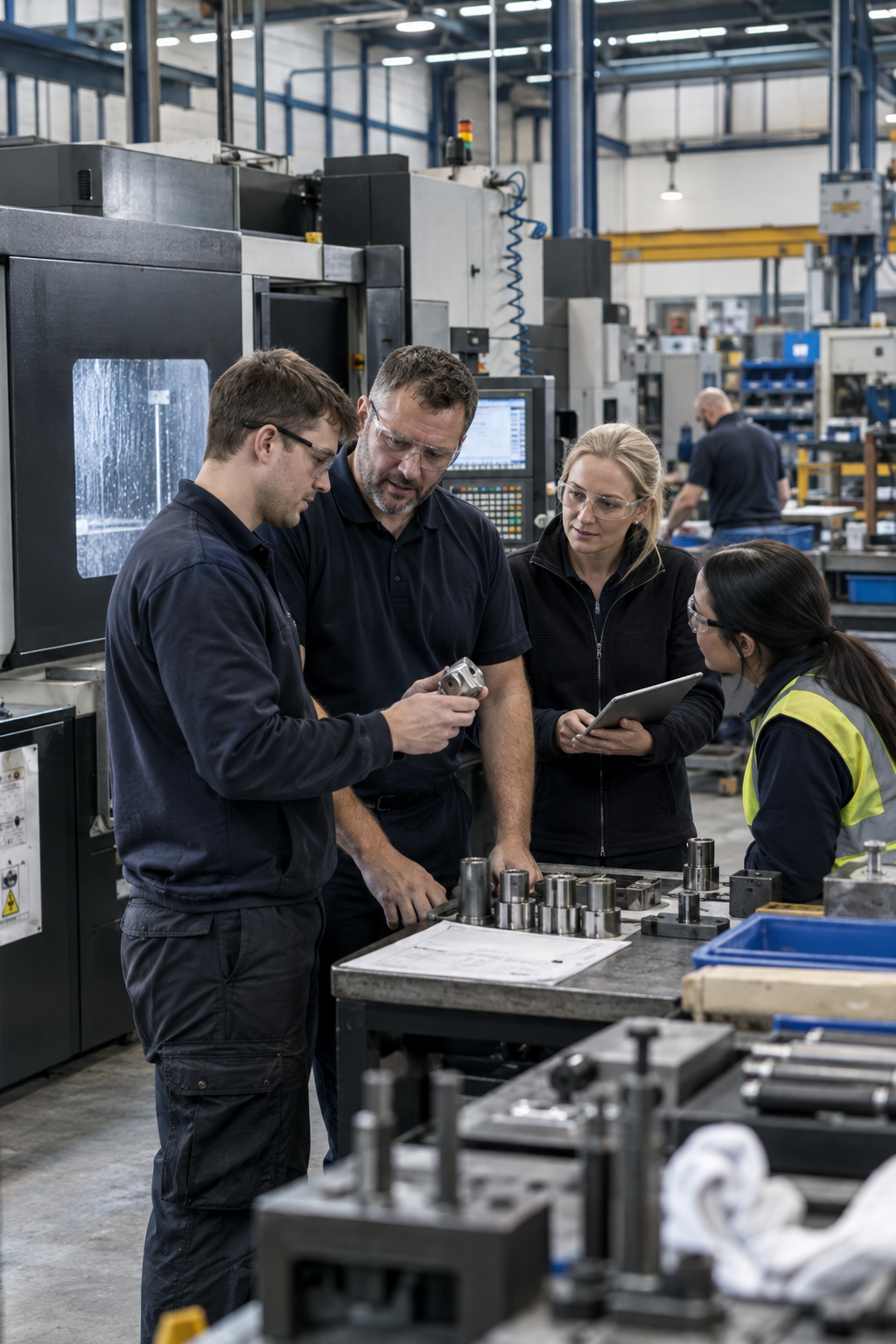
Good systems should create visible change.
The point of consultancy isn't another document on the shared drive. It should help the business strengthen control, involve people, build capability and make improvement easier to sustain.
From compliance activity to a stronger safety culture.
A longer-term improvement programme focused on moving Health & Safety beyond the QHSE function and creating more employee involvement, clearer ownership and practical improvement inside the operation.
Complex Health & Safety requirements became clearer, more practical and easier to turn into meaningful action.
The support was collaborative, dependable and focused on helping the business make progress rather than simply identifying problems.
External support should build internal capability, not create dependency. The aim is clearer ownership, more confident people, stronger controls and systems the business can continue using after the consultancy work.
Talk to DBIM →What needs to work better?
Maybe a customer wants certification. Maybe the Health & Safety arrangements need an independent check. Maybe the QHSE team needs more capacity, or something simply keeps coming back. Start with what's happening now. The right support can follow.
You don't need to diagnose the solution first.
Tell DBIM what has changed, what is causing concern or what the business needs to achieve.
Practical support. Proportionate systems. No unnecessary complexity. DBIM works with UK SMEs that want QHSE arrangements which make sense to the people running the business as well as the people auditing it.
Who we work with


