
Leadership Coaching & Mentoring for Industrial Businesses
Delivered by someone who has stood on the floor at six in the morning with the line down and a customer waiting on an answer.
The Problem
Most coaching aimed at manufacturing has never been near a factory. It sits alongside the health and safety and ISO work rather than apart from it - a safety system nobody follows and a middle manager who was never taught to hold a difficult conversation are the same issue wearing different clothes.
Growth
The business has outgrown the way it was run at half the size, and the leadership team hasn't caught up.
Who is it for
Owner-managers, MDs, Managers, Team Leaders, Starters of manufacturers, logistics operators and industrial engineering firms, typically £10m to £100m turnover, who have hit one of these:
Succession
Someone is being prepared to take over, or the founder wants to step back without the business stalling.
Post-Acquisition
Two cultures now share one balance sheet and nobody has said out loud how they differ.
Capability over headcount
You would rather make the six managers you have better than hire a seventh.
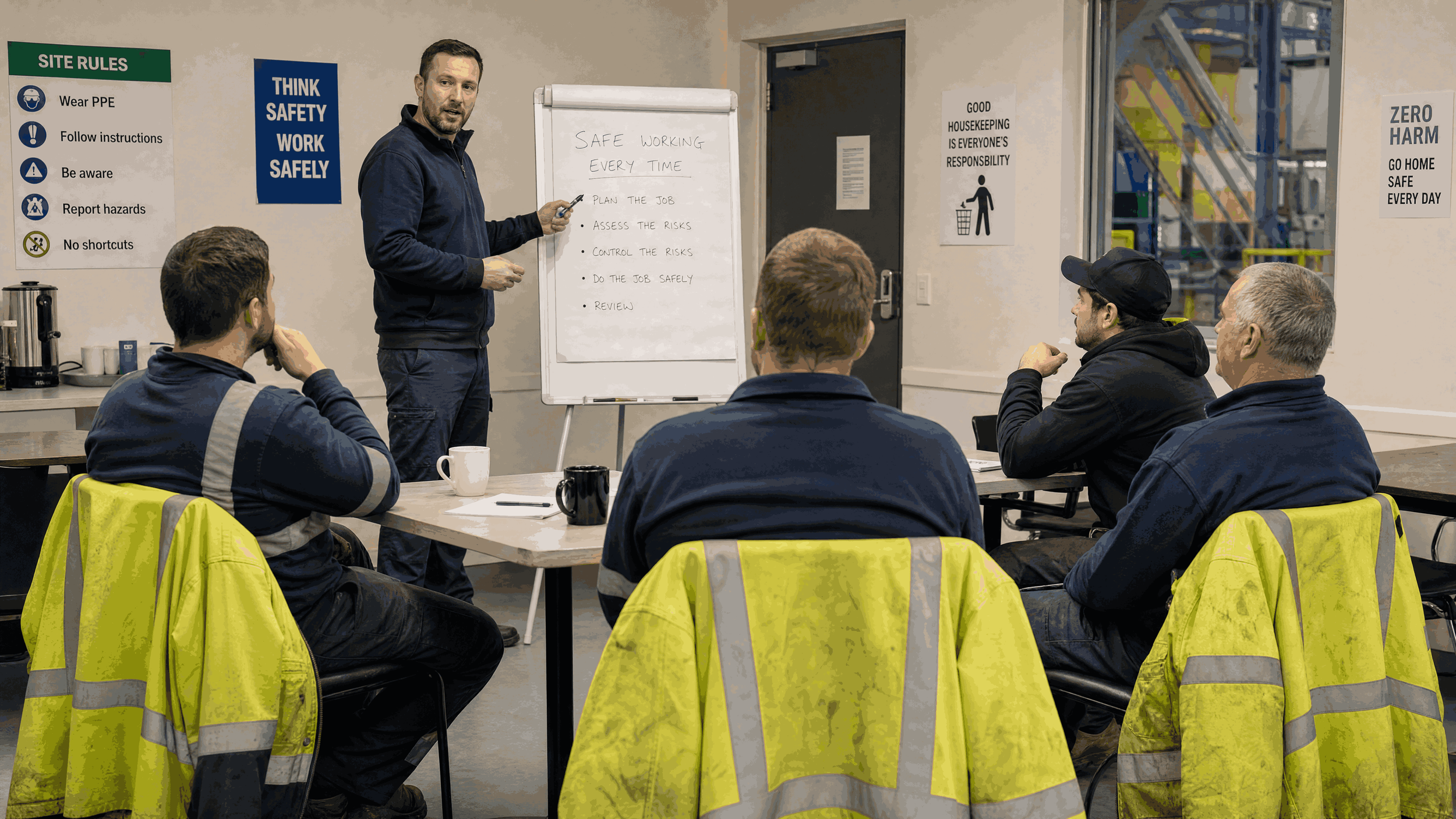
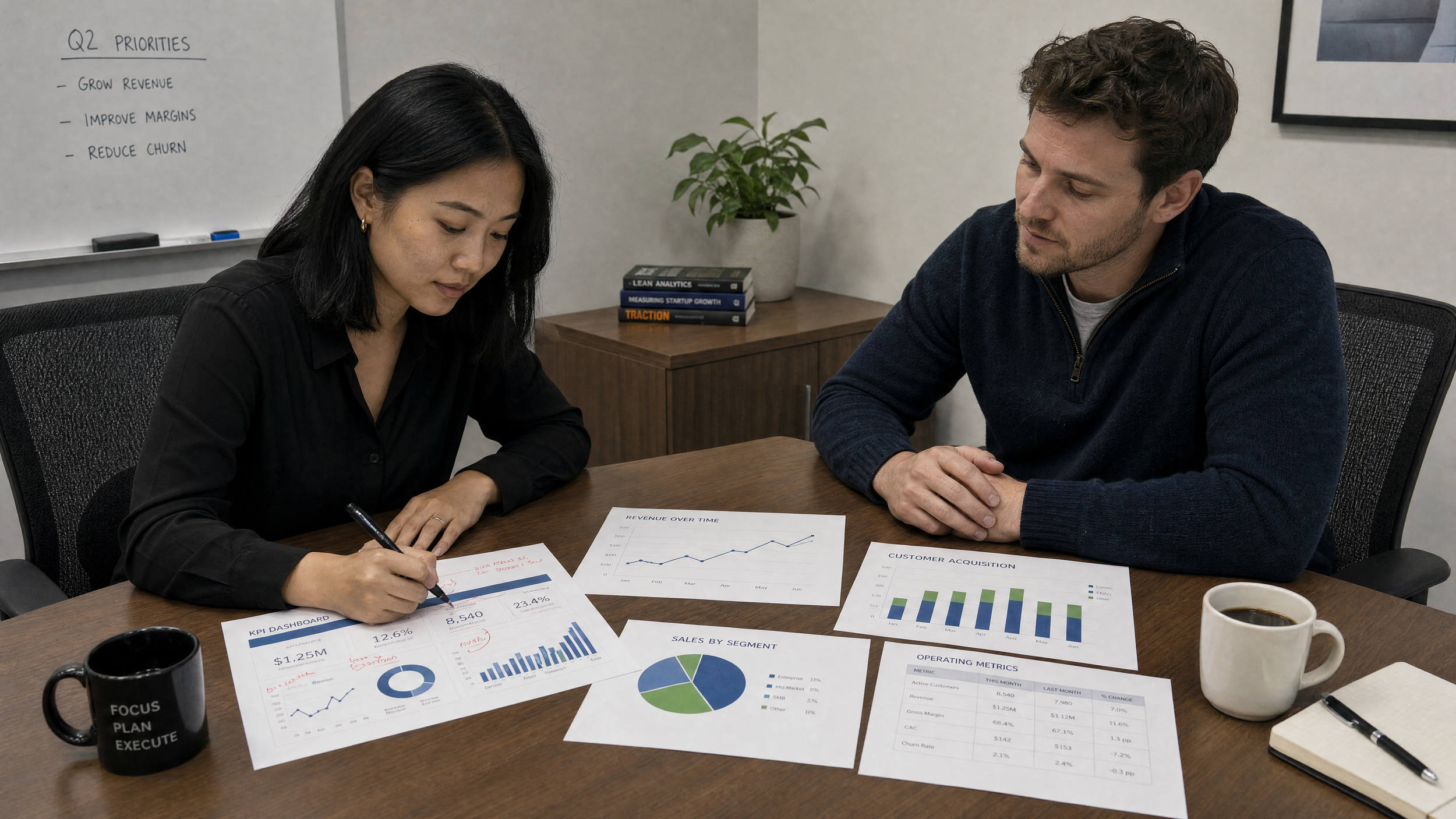
A 12-month, one-to-one coaching programme that turns whoever inherited health and safety into someone who can actually lead it. Built across three pillars - professional grounding, personal resilience, people influence - with one two-hour session a month tied to real work on their own site, not generic theory.
Turns whoever inherited health and safety into someone who can lead it.
Development Programmes
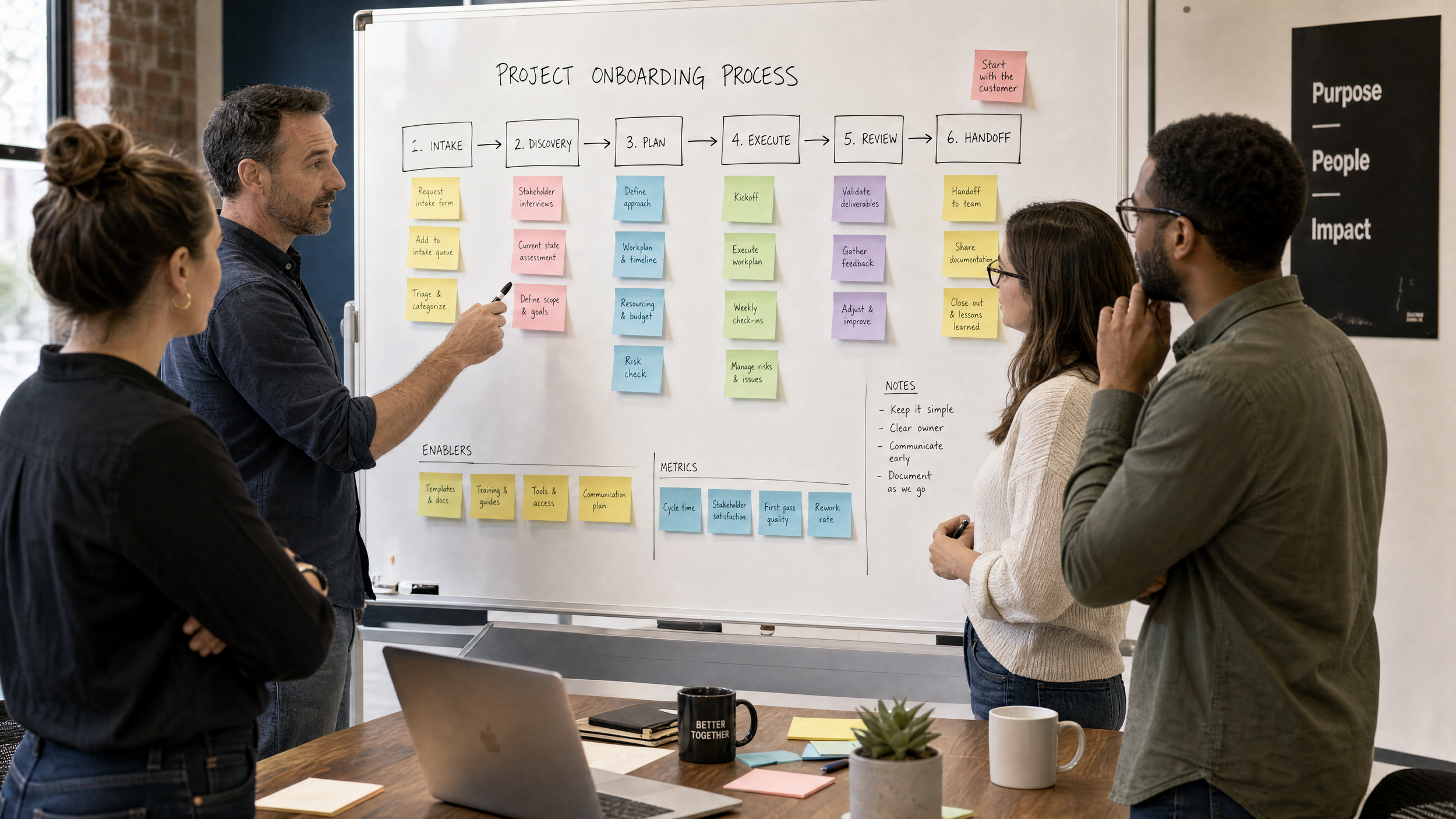
A 12-month coaching programme for MDs, Directors and Senior leaders who need safety, quality and culture to be part of how they lead, not a report someone else hands them. Built around real decisions in your business - but focused on the judgement calls only a leader can make: what gets resourced, what gets said in the room, and what the business actually rewards.
One to one for MDs, ops directors, managers, aspiring leaders - the decisions only a leader can make.
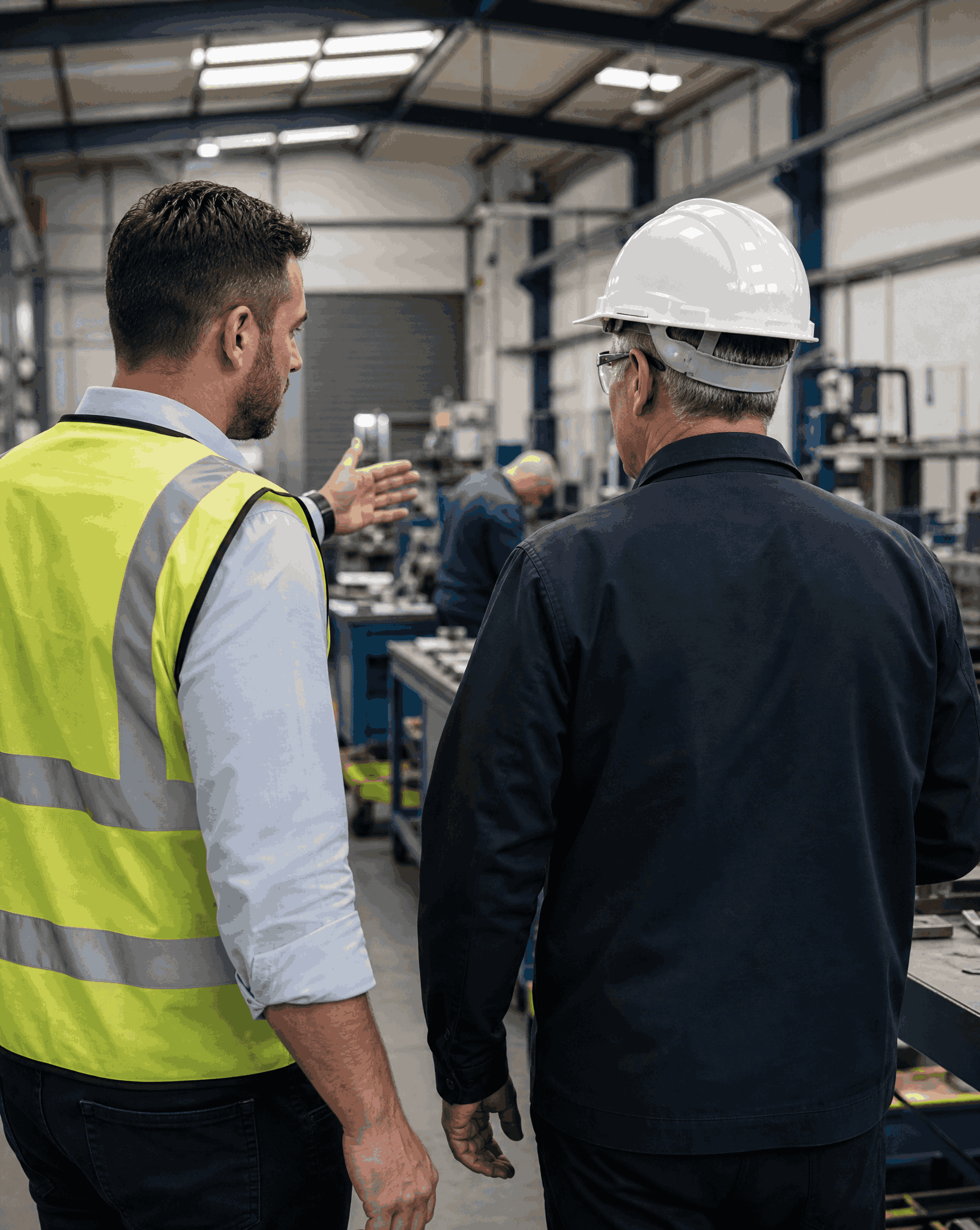
A 12-month coaching programme for supervisors and line managers who carry safety responsibility for their team alongside production targets, output and people problems. Builds the skills that don't come with the job title: challenging unsafe shortcuts without losing the room, running a toolbox talk that actually lands, and making safety part of how the shift runs rather than something that happens to it.
For supervisors promoted for their technical skill, never trained to manage people.
-
One to one, confidential, monthly or fortnightly. It isn't a course and there is no workbook. The agenda comes from what is actually in front of you: the decision you have been circling for three months, the director who isn't performing, the board conversation you are quietly dreading, the strategy that reads well and isn't happening. We work on that, and on the habits underneath it that keep producing the same situation. Owner-managers get a particular version of this. You built the thing. Every problem eventually lands on your desk because that is how it has always worked, and now that is the ceiling. Getting past it has less to do with time management than with deciding what you are genuinely willing to let other people do badly for a while.
-
The most common capability gap in an industrial business sits in the middle. Supervisors and managers promoted because they were the best operator, then given no training in how to manage people. They know the process inside out. Nobody has shown them how to run a decent one-to-one, how to hold someone to a standard without losing them, how to plan a week rather than react to it, or how to escalate properly. So they cover by doing the work themselves, and the team stays exactly as capable as it was. Mentoring here is practical and site-based. Real situations from their week, worked through, then followed up. It pairs well with a structured training programme where there is a genuine skills gap alongside the confidence one."
-
If you employ an in-house health and safety, quality or environmental manager, they are probably the only person in the building who does their job. They have nobody to test a judgement against, nobody to tell them when they are overcooking a risk assessment or missing something entirely, and their CPD is whatever they can find online at the weekend. This is developmental peer support. A monthly session with someone who has done the role, plus availability when something lands that they haven't seen before. It makes a competent person more competent, and it costs a great deal less than replacing one who left because they were isolated. It also works as the step down from a fractional HSEQ advisor arrangement once your internal person is genuinely up to speed.
Common questions.
-
Coaching and mentoring, not training. No standard programme, no cohort of twelve in a hotel meeting room, no certificate at the end. The agenda comes from whatever is actually in front of you that month. If what you need is accredited training, we'll point you at someone who does it properly.
-
The programmes run twelve months, but there's no tie-in. If the first two sessions aren't right, there's no obligation to continue. Culture and operational excellence reviews work differently - fixed scope, usually eight to twelve weeks, agreed before we start.
-
Yes. One-to-one sessions stay between the two people in them. Where a business is sponsoring coaching for someone else, we agree up front what gets reported back - normally progress against the goals we set, not the content of the conversations.
-
Both. In Greater Manchester we can come to you if that is what you prefer. Elsewhere in the UK sessions run remotely over Teams between site visits. Most coordinator and management programmes work perfectly well entirely remotely; culture reviews need time on site by definition.
-
Yes. The same structure scales across a team - several managers on the operational programme, or a full leadership team rather than an individual.
-
Dan Bower, who runs DBIM. Eight years in chemicals and manufacturing, worked up from the shop floor to QHSE and Continuous Improvement Manager, and has led businesses through ISO 9001, 14001 and 45001 certification. He didn't start in a boardroom - he was handed health and safety as a coordinator and grew into the role, which is the same journey a lot of the people we coach are on. As QHSE Manager he led a safety culture change that won Best H&S in Manufacturing at the 2024 Safety & Health Excellence Awards, was a finalist for H&S Manager the Year after, also won Future Leader and Young Achiever at the BASA Showcase the year after that. NEBOSH Diploma, NEBOSH National Diploma in Environmental Management, ISO 9001 Lead Auditor (CQI/IRCA), IOSH member.
Why us rather than a coach?
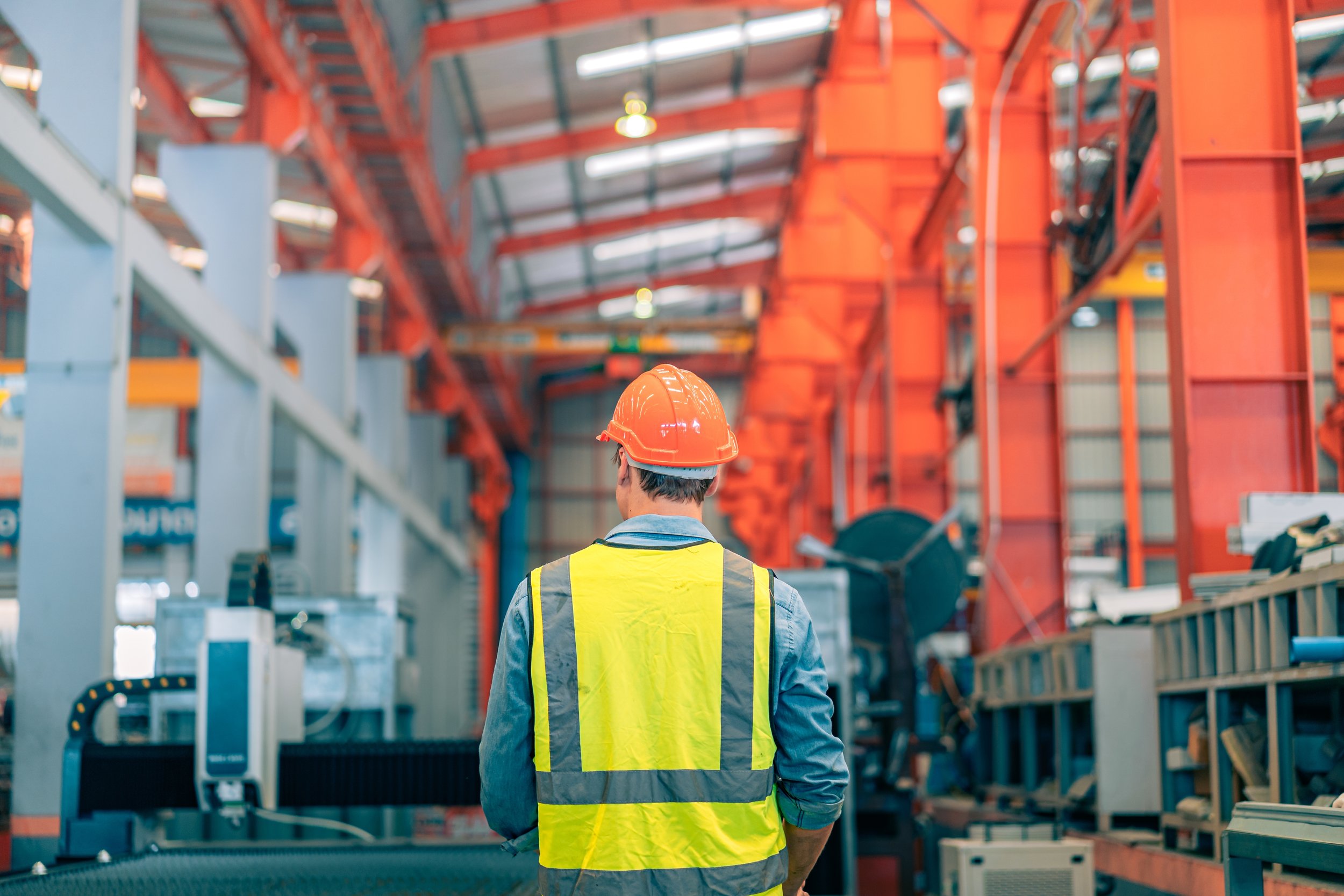
Plenty of coaches will beat us at coaching in the abstract. Very few will understand what your Tuesday looks like. All of this is built on running operations inside industrial businesses and on the QHSE work we do with manufacturers every week. That means the conversation starts at the right level, and the advice takes account of the customer audit in three weeks, the agency labour problem and the machine that keeps going down.
The first conversation costs nothing and commits you to nothing. If it isn't the right fit we'll say so, and if what you actually need is an HR specialist or a training provider we'll point you at one."