
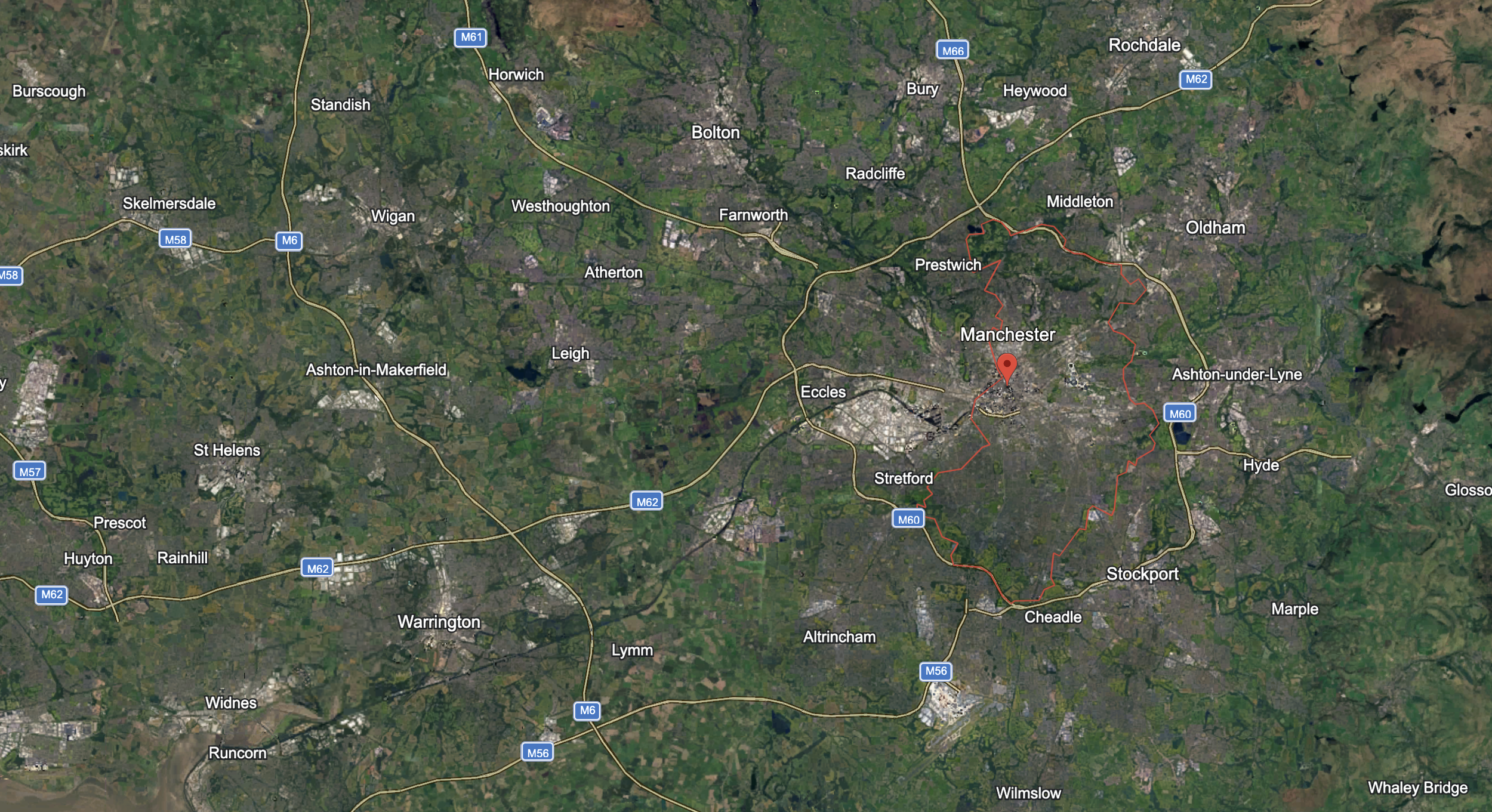
Health & Safety and ISO Consultants in Manchester
30 minutes from Bury
Why Manchester businesses call us
Almost always a customer or a tender. Someone has made ISO 9001 a condition of supply, or a bid has been scored down for not holding 14001, or an insurer has started asking about 45001. Occasionally it's internal - a business that has grown past the point where the founder can hold quality in their head.
Manchester also produces a particular kind of call: firms that already hold a standard, implemented cheaply from a template, that didn't survive its first real audit. Rebuilding one of those is usually quicker than people fear, because the raw material is already there.
Competent person cover
Named Reg 7 appointment, from £250/mo.
Health & safety in Manchester
Risk assessments
Written from what your team actually does.
Audits & inspections
See what an HSE inspector will see, first.
Competent person cover Under Regulation 7 of the Management of Health and Safety at Work Regulations 1999 you have to appoint someone competent to help you meet your legal duties. That appointment has to be real rather than nominal - someone with the training, the experience, an understanding of your specific hazards, and the time and authority to actually do something about them. We take it formally: our name on your documentation, reasonable access between visits, sign-off on assessments and safe systems of work, and a written annual statement. Worth it when: nobody in-house holds the competence, or the person who did has left.
Risk assessments Most risk assessments fail the same test. Open the folder, read the document, walk onto the floor, and none of it matches. We build them from direct observation - watching the task being done rather than described, writing them at a reading level your operators actually use, and reviewing them with the supervisors who'll own them. Reviews are triggered by change, not by the calendar: a new machine, a new substance, a process modification, an incident. Worth it when: your assessments predate your current process, or nobody can remember who wrote them.
Audits and inspections Internal audits, contractor audits and pre-HSE reviews. The point is to see what an inspector will see before they see it, with findings prioritised by risk rather than listed alphabetically. Where you already hold ISO 45001, this doubles as your internal audit programme rather than being a separate exercise. Worth it when: a customer audit or surveillance visit is coming, or nobody independent has looked at the site in years.
Incident investigation Root cause analysis that goes past "the operator didn't follow the procedure" and finds the system failure underneath it. Corrective actions tracked to closure rather than logged and forgotten. And RIDDOR judgement calls made properly — including the ones where reporting isn't actually required and people assume it is. Worth it when: something has happened, or the same thing keeps happening.
Incident investigation
Root cause, tracked to closure.
ISO in Manchester
ISO 9001 - Quality Management
The most requested of the three, and usually the first one a customer names. It's about consistency: doing the same job the same way, catching problems before they reach the customer, and being able to show why. In practice that means process documentation that matches how the work is actually done, non-conformance handling that closes things out, supplier controls, and internal audits that find real issues rather than confirming everything is fine.
Worth it when: a customer or tender has made it a condition of supply, or you're losing margin to rework and can't pinpoint where.
ISO 14001 - Environmental Management
Environmental management built around your real aspects and impacts — waste streams, emissions, energy, water, and what happens to your product at end of life. The part most templated implementations get wrong is the legal register: a list of regulations that nobody maintains is worse than not having one, because it looks like control when it isn't. Done properly it also does double duty, since most of what an EcoVadis or customer sustainability assessment asks for already lives inside a working 14001 system.
Worth it when: customers are asking about your environmental credentials, you're bidding for public sector work, or waste and energy costs have become visible on the P&L.
ISO 45001 - Occupational Health and Safety
The health and safety standard, and the one that replaced OHSAS 18001 — if you still hold an 18001 certificate, it expired some years ago. Built on genuine hazard identification and risk control, with worker participation as a requirement rather than a nice-to-have, which is the clause most businesses underestimate. It's a certified management system that proves what good H&S practice should already be doing.
Worth it when: an insurer, a tier-one customer or an incident has put your safety arrangements under scrutiny, or you're already doing the work and want it recognised.
All three share the same core structure, so running them as one integrated system means one audit programme and one management review instead of three. More on our ISO consultancy → Here
The industries we know in Manchester
Manchester's industrial base is spread rather than concentrated - Sharston and Roundthorn out towards the airport, City Works and the Openshaw estates to the east, Newton Heath and the Piccadilly fringe closer in. It skews towards small and mid-sized manufacturers, urban logistics and airport-related freight rather than single large plants.
Greater Manchester as a whole carries a 120,000-strong advanced manufacturing and engineering workforce, with real depth in chemicals and advanced materials, food and drink, and electronics — and the region is investing heavily, including a 60-acre advanced manufacturing and science campus taking shape at the airport.
For ISO work that variety matters. A 9001 system built for a precision engineering firm looks nothing like one built for a food producer or a third-party logistics operator, and templated implementations fail precisely because they ignore that.
Town FAQs
-
Yes - there's a dedicated page for it. The two are usually bought together, and using one person for both costs less than running two relationships. Your ISO 45001 hazard identification and your legal health and safety duties are largely the same work presented two ways.
-
A single standard typically runs twelve to twenty weeks from gap analysis to certification audit, depending on how much documentation already exists and how much internal resource you can commit. An integrated build across two or three standards runs to a similar timescale, because the shared structure means you aren't doing the work three times.
-
Usually, and faster than starting again. Templated systems fail because they describe a generic business rather than yours - so the fix is normally rewriting the parts that don't match reality and building an internal audit programme that actually finds things, rather than binning the whole system.
-
One that's UKAS-accredited - that's the part that matters, and it's worth checking rather than assuming. Beyond that it comes down to sector experience, auditor availability and cost, which vary more than people expect. We help compare quotes and sit in on Stage 1 and Stage 2.
-
A single standard runs £4,000 to £10,000. An integrated build across two or three standards is £10,000 to £30,000, agreed as a fixed fee after a gap analysis. Certification body fees are separate and go to them, typically £4,000 to £9,000 across a three-year cycle.
Nearby Areas
Altrincham · Stockport · Bury · Oldham
Tell us what prompted the search - a tender, an audit, an incident, a resignation.