
The building is only part of the responsibility.
DBIM supports businesses responsible for commercial premises with Health & Safety, contractor control, compliance systems and ongoing QHSE improvement. The focus is on making responsibilities clear, maintaining oversight and turning requirements into actions that actually get followed through.
The important question isn't simply “has it been inspected?” It's who owns the requirement, what happens when something is found and how you know the issue has actually been dealt with.
One building. Lots of responsibilities.
A commercial building can involve owners, tenants, employees, visitors, contractors, managing agents and specialist providers, all interacting with the same premises.
The bigger challenge is often not discovering that something needs doing. It's knowing who owns it, when it needs doing and whether the resulting action has actually been closed.
People need safe access, suitable workplaces, welfare, emergency arrangements and clear information where relevant.
Floors, stairs, roofs, doors, external areas and general building condition all need appropriate oversight.
Electrical systems, lifts, water systems, fire arrangements, plant and other building services need appropriate management.
Contractors need suitable information, access arrangements and controls around the work they're there to complete.
Records need to show more than that an inspection happened. They should help identify what still needs attention.
Someone needs overall visibility. Even where landlords, tenants, agents and specialist contractors have different responsibilities, gaps can appear when everybody assumes somebody else is dealing with them.
DBIM's role is to help create that visibility: understand the responsibilities, organise the controls, track the actions and recognise where specialist competence is needed.
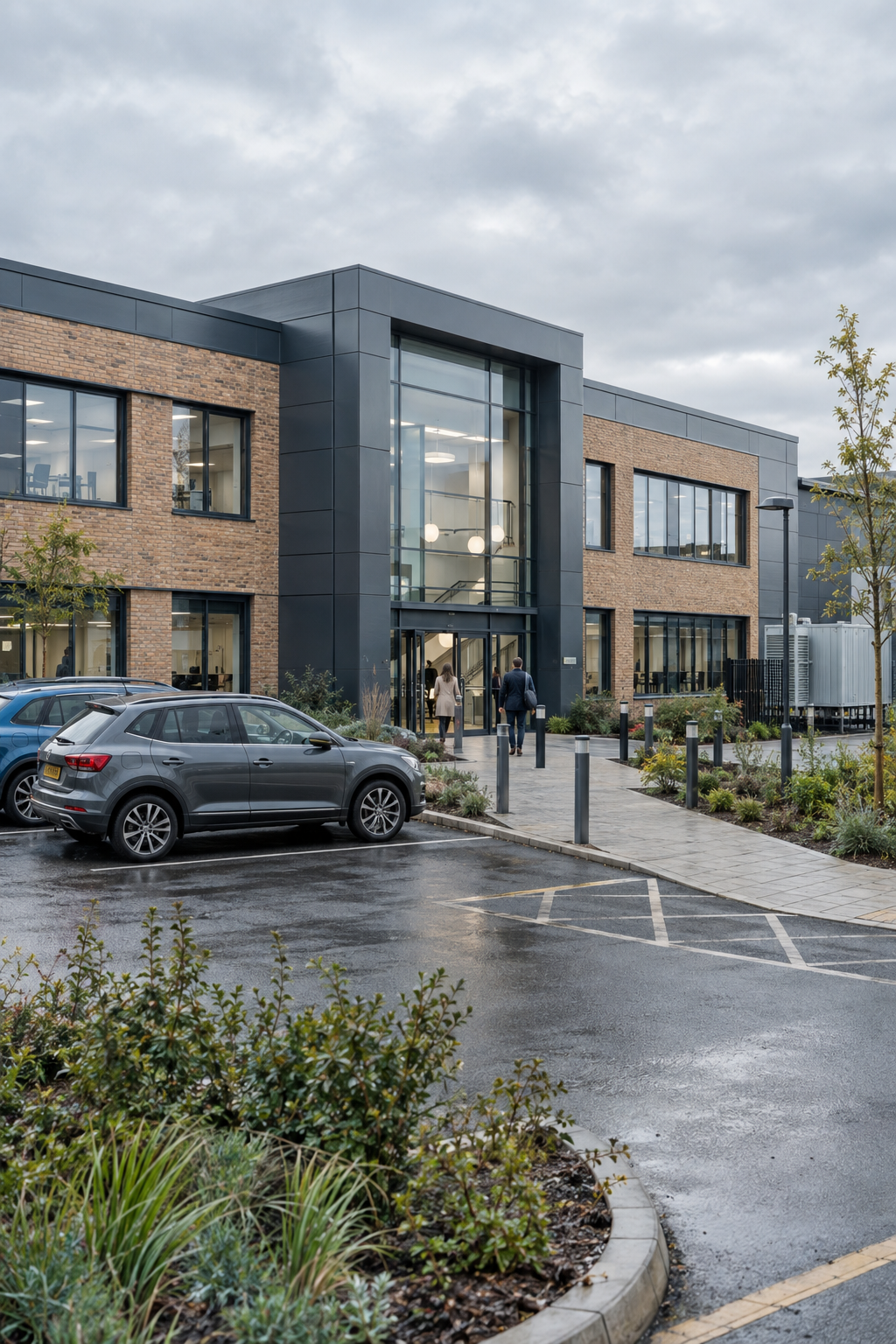
Plenty to manage. One picture to maintain.
Commercial premises can generate assessments, certificates, inspections, registers and specialist reports from several different providers. The challenge is keeping an overall view of what applies, what's current and what still needs action.
Building & workplace
Floors, stairs, roofs, access routes, welfare, lighting, external areas and general workplace condition.
Condition · Access · WorkplaceFire & emergency
Risk assessment actions, evacuation arrangements, emergency information, drills and ongoing follow-up.
Assess · Plan · Maintain · ReviewAsbestos management
Understand dutyholder responsibilities, maintain the register and management plan, monitor known materials and make relevant information available before work takes place.
Register · Plan · Monitor · InformWater & Legionella
Make responsibilities, risk assessments, monitoring, maintenance and specialist support part of a managed programme.
Responsibility · Control · EvidencePlant & equipment
Lifts, pressure systems, electrical systems, access equipment and other building plant need suitable maintenance and examination.
Inspect · Maintain · ActContractors
Selection, information, access, permits, site controls and follow-up all influence how safely maintenance work happens.
Select · Inform · Control · CloseA survey or inspection tells you something at a point in time. The management system is what happens afterwards: ownership, priorities, actions, recurring reviews, evidence and making sure nothing important disappears between different providers.
DBIM can help manage the overall arrangements, responsibilities, actions and evidence. Specialist surveys, testing, engineering examinations and technical assessments should still be delivered by appropriately competent providers where required.
Bringing in a contractor doesn't mean handing over the responsibility.
Commercial premises rely on external people to inspect, service, maintain, repair and alter buildings every day. The contractor may deliver the technical work, but somebody still needs to make sure the work is properly managed.
Select
Make proportionate checks that the contractor has the competence, resources and relevant credentials for the work being commissioned.
Inform
Give contractors the information they need about the premises, hazards, access arrangements and anything their work could disturb.
Control
Agree how access, isolation, permits, work areas, occupants and interactions with other activities will be managed.
Monitor
Check that significant work is being carried out consistently with the arrangements agreed before the job started.
Close
Confirm the work is complete, the premises have been left safe and any defects, certificates, reports or follow-up actions enter the compliance system.
Give contractors the information they need before the work begins.
Asbestos is a particularly clear example. Where asbestos-containing materials are present or presumed, relevant information about their location and condition needs to reach people who could disturb them. The survey or register only helps if it reaches the person doing the work.
DBIM can help clients establish proportionate selection, coordination, information, permit and follow-up arrangements. Technical trade work and specialist assessment should still be carried out by appropriately competent providers.
The job isn't finished when the contractor leaves site. Reports, recommendations, certificates and resulting actions need somewhere to go, somebody to own them and a route to closure.

You don't need one consultant pretending to be seven specialists.
Commercial property involves technical disciplines that require specific competence, accreditation or statutory examination. DBIM's value is helping make sure those specialist activities sit inside a controlled compliance system rather than operating as disconnected reports.
The system around the specialists.
Define who owns each requirement and how responsibilities interact.
Keep recurring assessments, inspections and reviews visible.
Make sure relevant information reaches the people carrying out the work.
Turn findings and recommendations into owned, prioritised follow-up.
Maintain enough visibility to demonstrate what has been completed and what remains open.
The technical work.
Specialist surveying, sampling, analysis and technical asbestos work.
Specialist assessment, water-system advice, treatment and technical monitoring where required.
Fire-risk and engineering expertise where specialist competence is required.
Technical electrical inspections, testing and certification by suitable providers.
Lifts, lifting equipment, pressure systems and other equipment where competent examination is required.
Make the specialist output useful. A technically excellent report still needs to reach the right person, generate the right actions, be reviewed at the right frequency and remain connected to the way the premises are managed.
The aim isn't for DBIM to replace technical specialists. It's to help make sure specialist work forms part of an organised, visible and accountable premises-compliance programme.
The right level of support depends on the building.
Some organisations simply need competent advice when questions arise. Others need help bringing actions, contractors and compliance records under control. Some need somebody to help keep the whole programme moving. DBIM can scale the support around that need.
Competent Person Advice Line
For businesses that manage premises health & safety internally but want competent advice available when an issue, question or unusual situation arises.
Premises Compliance & QHSE Support
Hands-on help organising premises H&S arrangements, contractor controls, inspections, compliance actions and the systems used to keep everything visible.
Fractional QHSE Support
Regular support for organisations that need somebody to help coordinate, review and drive the wider compliance programme without immediately recruiting another full-time role.
Energy, waste, environmental aspects, compliance obligations and improvement across premises or property portfolios.
Risks, responsibilities, contractors, objectives, incidents and continual improvement.
The objective isn't to create another layer between you and your specialist providers. It's to give the organisation clearer oversight of the whole premises-compliance picture and help make sure actions actually move.
Knowing what needs doing isn't the same as knowing it's done.
Commercial premises create recurring checks, assessments, inspections and actions throughout the year. A good compliance system connects the requirement to an owner, a date, evidence and a route to closure.
Requirement
What needs managing, inspecting, assessing or reviewing?
Owner
Who is actually responsible for making sure it happens?
Frequency
When is it due and what should trigger an earlier review?
Evidence
What record demonstrates the activity was completed?
Action
What happens when the inspection or assessment finds something?
Review
Is the control still current, effective and appropriate?
One controlled view of the premises.
Not another folder full of PDFs. The useful outcome is visibility: what applies, who owns it, what is due, what evidence exists and which actions still need attention.
This becomes even more valuable across multiple premises. A consistent framework lets the business manage common requirements centrally while still seeing site-specific risks, actions and responsibilities.
Different premises. The same need for visibility.
DBIM is best suited to organisations that are responsible for commercial premises but need a clearer, more practical way to manage Health & Safety, contractors, compliance actions and specialist providers.
Commercial landlords
Property owners managing common areas, building responsibilities, contractors and compliance across occupied premises.
Managing agents
Teams coordinating owners, tenants, maintenance providers and recurring compliance requirements across client properties.
Owner-occupiers
Businesses occupying and managing their own commercial building without a dedicated property compliance department.
Property & estates teams
Internal teams overseeing maintenance, contractors, site requirements and compliance across operational premises.
Multi-site businesses
Organisations needing common standards and central visibility while recognising that each premises has its own risks and actions.
We don't need to be the expert in every building system to help you manage the bigger picture.
DBIM's strength is in QHSE systems, audits, responsibilities, actions, contractor interfaces and follow-through. Where specialist technical competence is required, the right provider delivers that work while the resulting requirement stays visible within the wider management system.
Businesses with enough premises complexity that somebody needs to hold the picture together, but not necessarily enough scale to justify a large in-house QHSE or compliance team.
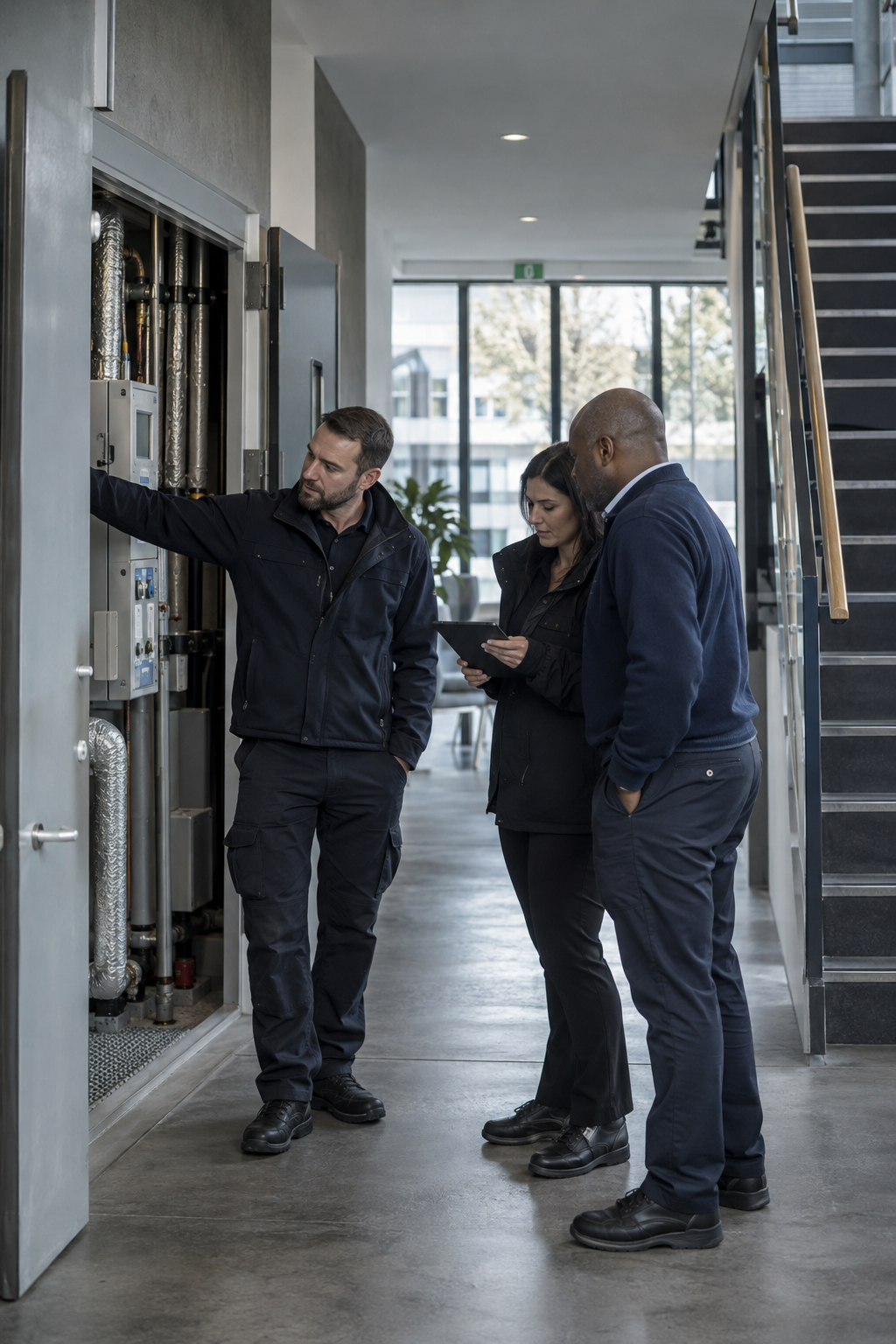
Start with what's making the premises difficult to manage.
You don't need to know which DBIM service you need. Start with the problem, the uncertainty or the thing that's becoming difficult to keep on top of. We'll help work out a proportionate starting point.
Things are being inspected and maintained, but you want an independent view of the wider Health & Safety arrangements and where the gaps may be.
Surveys, certificates, contractor reports and actions exist, but responsibility, status and follow-up are difficult to see.
Selection, access, RAMS, permits, information or follow-up arrangements aren't working as consistently as they should.
You need common standards and central visibility without pretending every premises has exactly the same risks.
The internal team handles normal premises management, but you want competent advice available when an unusual question or situation arises.
The business needs regular oversight, action tracking, review and coordination beyond the capacity currently available internally.
Tell us what isn't joining up.
You might not need another survey or inspection. Sometimes the problem is simply that responsibilities, reports, contractors and actions aren't working together. Tell us what you're seeing and we'll help work out the sensible next step.
What's happening behind the front door?
One building or twenty. One unresolved contractor action or a compliance programme that's become difficult to see clearly. You don't need to have the whole problem diagnosed before speaking to DBIM.
Three questions.
No hard sell and no pretending every problem needs another survey. We'll help identify what needs managing, where specialist input belongs and what a sensible next step looks like.