
Engineering happens on the workshop floor. Your QHSE system should work there too.
Practical QHSE support built around real machinery, real processes and real operational pressure.
DBIM supports engineering SMEs with Health & Safety, Quality, Environmental Management, ISO systems and ongoing QHSE improvement. The aim isn't more paperwork. It's stronger controls, clearer systems and better ways of working that make sense in the environment where the work actually happens.
Rooted in manufacturing and operational QHSE experience. Built for engineering businesses that want practical support without the corporate consultancy approach.
Engineering businesses rarely have simple risk profiles.
Machinery, fabrication, lifting operations, hazardous substances, noise, maintenance, contractors and changing production demands can all exist under one roof.
And while every engineering business is different, the challenge is often similar: keeping people safe and systems under control without losing sight of production, quality and delivery.
That's why DBIM starts with how the operation actually works. The people, equipment, processes and pressures come first. The paperwork should support them, not the other way around.
Understand the operation before prescribing the solution. Good QHSE systems need to work during a busy Tuesday afternoon, not just when an auditor is visiting.
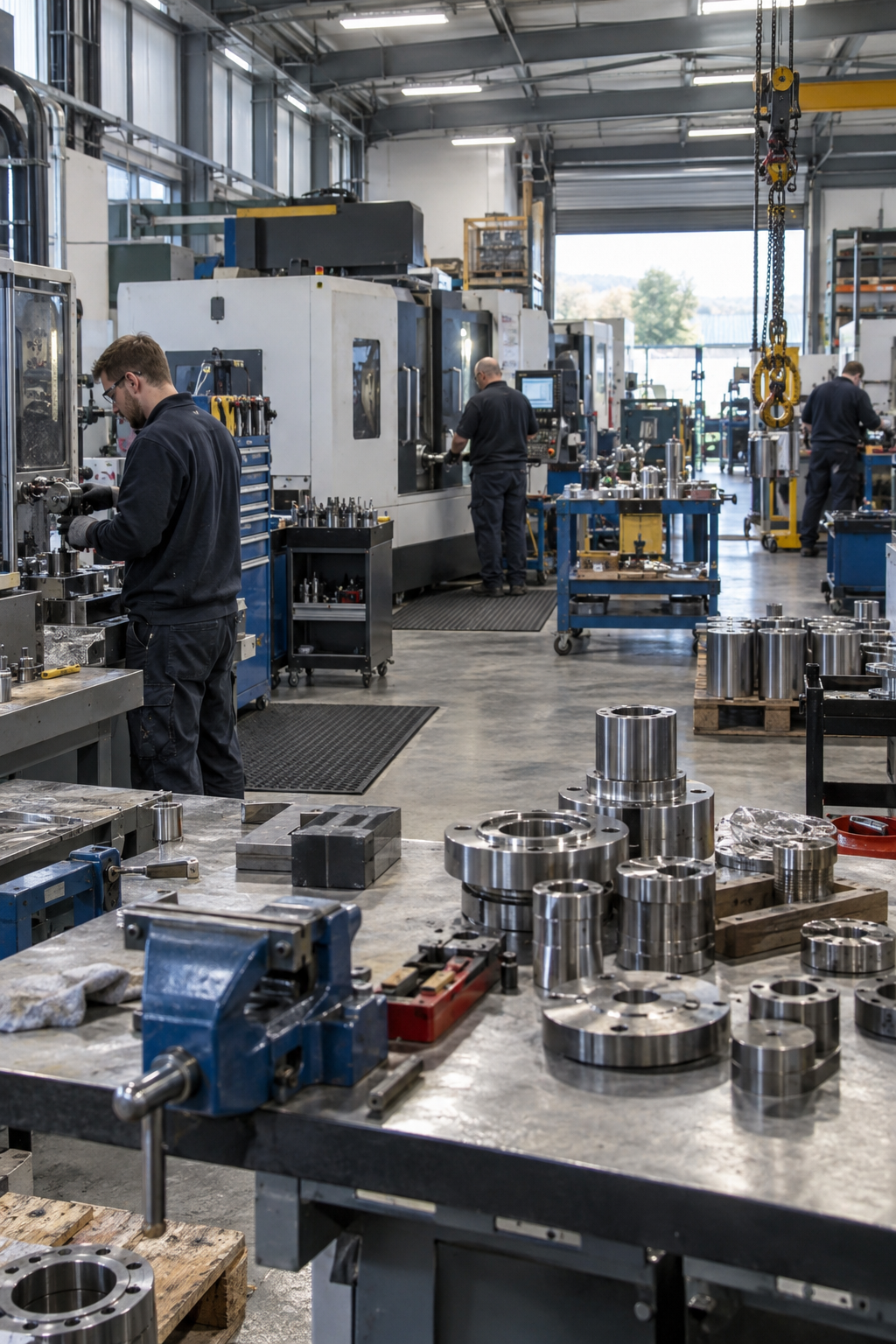
Engineering risk doesn't come in one neat category.
Good engineering health and safety means looking at how hazards interact. Machinery, substances, lifting, occupational health and maintenance arrangements can all affect the same people and process. The controls need to work together too.
Machinery & PUWER
Suitability, guarding, interlocks, emergency stops, inspections, maintenance, isolation and the competence of people using or intervening with equipment.
Work equipmentWelding & fabrication
Welding fume, hot work, gases, burns, fire, extraction, respiratory protection and the way fabrication work is planned and controlled.
Exposure & processCOSHH & metalworking fluids
Oils, coolants, degreasers, paints, adhesives, dusts and mists need appropriate assessment, exposure controls, maintenance and health arrangements.
Hazardous substancesLifting & material handling
Cranes, hoists, lifting accessories, forklifts, heavy components and manual handling all need to fit into the way materials actually move through the operation.
Movement & liftingNoise & vibration
Everyday use of machinery and powered tools can create long-term hearing and vibration risks that aren't always obvious until damage has already occurred.
Occupational healthMaintenance & isolation
Breakdowns, cleaning, setting, adjustments and fault-finding often put people closer to danger. Isolation and safe intervention arrangements matter just as much as normal operation.
Safe interventionA checklist isn't the same as control.
DBIM helps engineering businesses look at the arrangements behind the assessment: ownership, competence, maintenance, supervision, follow-up and whether the controls actually work when the workshop is busy.
From one problem to the whole QHSE system.
Sometimes you need help solving one specific issue. Sometimes the problem is a symptom of something wider. DBIM can support both, from practical H&S advice through to ISO systems and ongoing QHSE support.
Health & Safety
Practical support with workplace risks, assessments, safe systems, inspections, investigations and the arrangements needed to keep engineering activities under control.
ISO Management Systems
Build, integrate or improve management systems around ISO 9001, ISO 14001 and ISO 45001 without turning the business into a paperwork exercise.
Environmental & Sustainability
Understand environmental impacts, legal obligations, waste, energy, objectives and practical opportunities to strengthen environmental performance.
Fractional QHSE Support
Ongoing support for engineering SMEs that need additional QHSE capability, leadership or implementation support without immediately adding another full-time senior role.
Competent Person Advice Line.
Smaller engineering businesses don't always need somebody embedded in the operation.
The DBIM Competent Person Advice Line gives you ongoing access to competent health & safety advice, plus an annual Health & Safety Health Check.
The level of support should match the problem. If you need advice, we'll advise. If something needs deeper investigation, specialist input or hands-on implementation, we'll explain that clearly before the work starts.
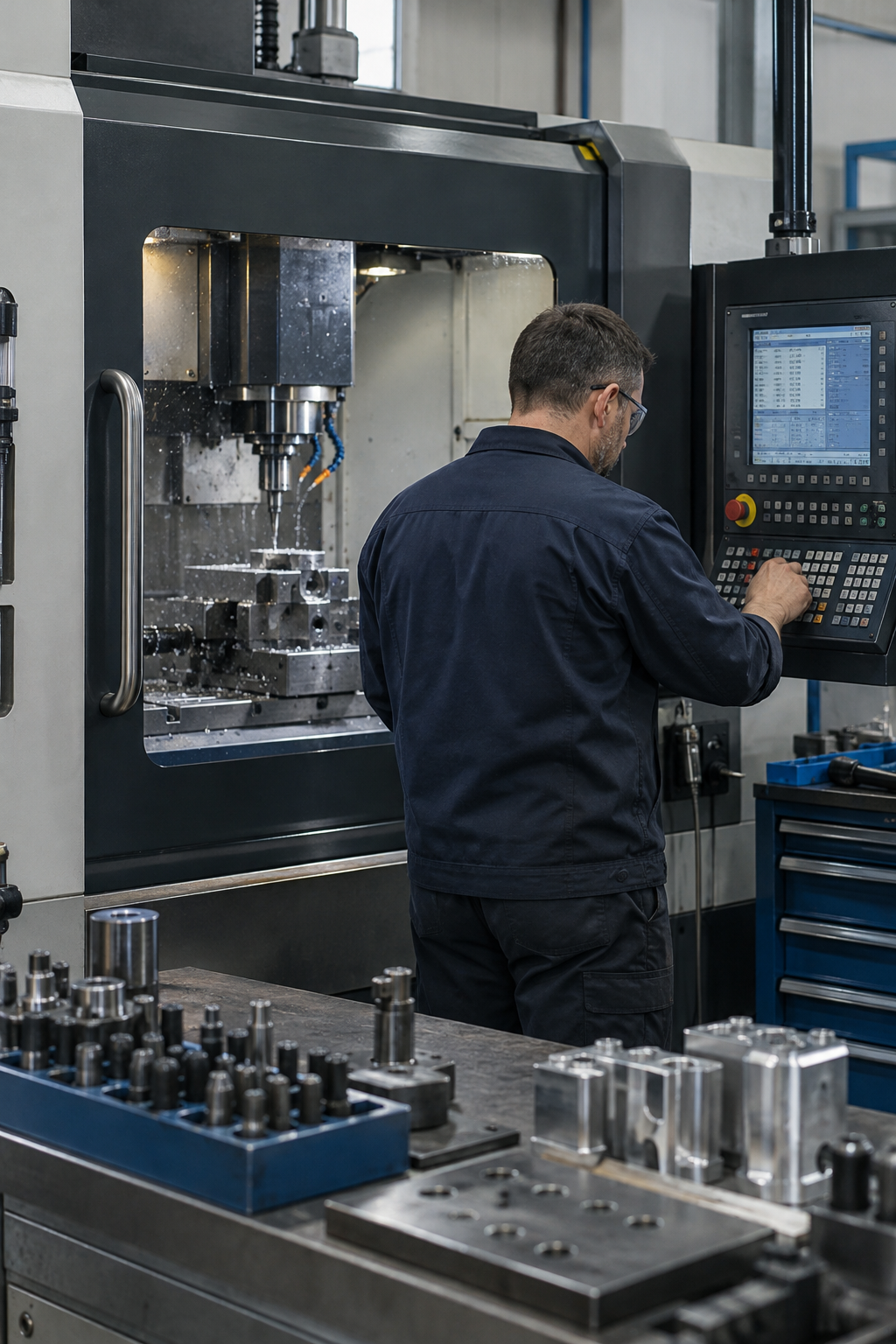
Machinery safety goes beyond the PUWER assessment.
A PUWER assessment can identify a problem. It doesn't automatically fix how equipment is selected, guarded, maintained or used. The real test is what happens throughout the machine's working life.
Select
Is the equipment suitable for the task, environment and people expected to operate or maintain it?
Assess
Understand dangerous parts, foreseeable use, intervention, access, stored energy and what happens when something goes wrong.
Control
Put appropriate guarding, protective devices, isolation, emergency arrangements and safe ways of working in place.
Maintain
Keep equipment, safeguards and controls effective through inspection, defect management and planned maintenance.
Review
Revisit risk when equipment, tooling, controls, processes, materials or the way people interact with the machine changes.
We look beyond whether an assessment exists. The important questions are whether actions were closed, guards remain effective, isolation works, maintenance is controlled and the people using the machine understand the risks.
Specialist machinery expertise still matters. Where a machine requires specialist engineering assessment, safety-system validation or other technical expertise, DBIM can help identify the requirement and work alongside the appropriate competent specialist rather than pretending one adviser can do everything.
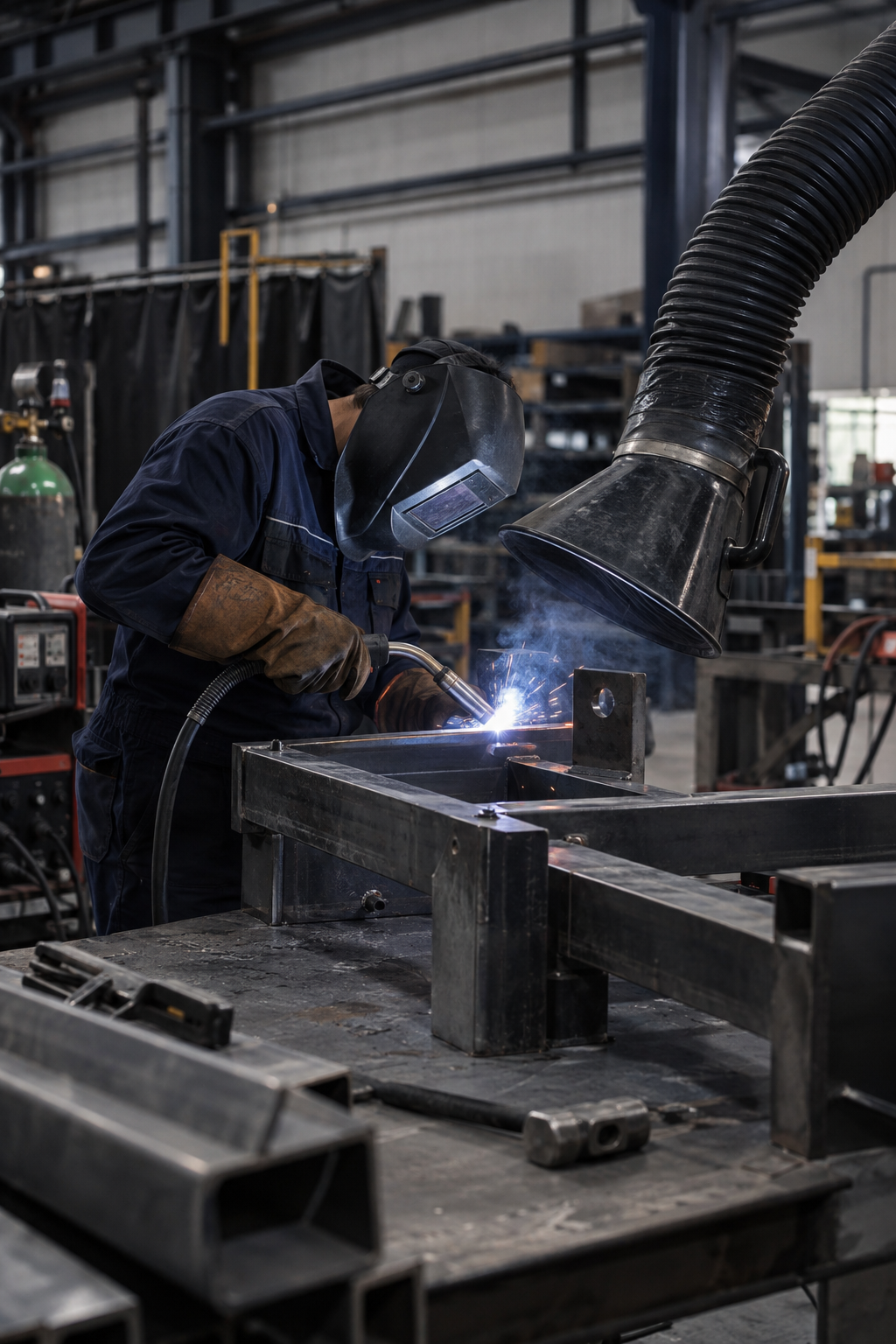
Welding fume isn't just part of the job.
Welding is part of everyday life in many engineering businesses, but familiarity shouldn't make the risks invisible.
All welding fume can cause lung cancer. Effective control means understanding the process, reducing exposure and making sure the controls provided actually work in practice.
Understand
Consider the welding process, materials, consumables, frequency, duration and people who could be exposed.
Reduce
Look first at whether the work can be avoided, reduced, changed or completed using a lower-fume process.
Extract
Where appropriate, capture welding fume at source using suitable local exhaust ventilation positioned and used correctly.
Protect
Use suitable respiratory and personal protective equipment where required as part of the overall control strategy.
Maintain
Keep extraction and other exposure controls effective, make sure people know how to use them and review whether controls continue to work.
The question isn't simply whether you have LEV. It's whether the right control has been selected, people use it properly, it is maintained, and welding arrangements continue to control exposure as the work changes.
Specialist testing still has its place. Where occupational hygiene monitoring, LEV examination, RPE selection or other specialist technical input is required, DBIM can help identify the need and work alongside the appropriate competent provider.
One business.
Three standards.
One system.
Quality, environmental management and health & safety affect the same people, equipment and processes. They shouldn't feel like three separate management systems competing for attention.
Quality.
Make it right.Control requirements, processes, suppliers, inspection, non-conformance and improvement so quality is built into the operation rather than inspected in at the end.
Environment.
Reduce the impact.Understand environmental aspects, legal obligations, waste, energy, materials and improvement opportunities within the engineering operation.
Health & Safety.
Work safely.Manage hazards, legal requirements, worker involvement, operational controls, incidents and improvement as part of normal business management.
One management system built around the business.
Your engineers, supervisors and operators don't need to know whether a requirement came from ISO 9001, ISO 14001 or ISO 45001.
They need one clear way of controlling the work, with common processes for risk, objectives, competence, change, audit, corrective action and management review.
Already certified? DBIM can also help engineering businesses simplify and improve existing systems that have become document-heavy, fragmented or disconnected from how the operation actually works.
Quality can't be inspected into a product at the end.
Final inspection matters, but inspection only tells you what happened. Strong engineering quality systems look further upstream: what was required, how the work was controlled and why something went wrong in the first place.
Requirements
Make sure customer, drawing, specification and regulatory requirements are understood before work begins.
Process
Control the people, equipment, methods, materials and information that determine whether the job comes out right.
Verification
Inspect and test at sensible points in the process rather than relying solely on finding defects at final inspection.
Non-conformance
Contain the problem, understand its extent and prevent non-conforming product progressing or reaching the customer.
Improvement
Investigate why failures happen, take proportionate corrective action and use the data to prevent repeat problems.
ISO 9001 should support this, not sit alongside it. DBIM helps engineering businesses connect the management system to the actual quality controls, NCRs, data and improvement work already happening in the operation.
Compliance is the foundation. Not the destination.
An engineering business can have risk assessments, procedures, inspections and ISO certificates and still struggle with inconsistent behaviours on the workshop floor. The real test is what happens when nobody is preparing for an audit.
Compliance
Legal requirements, assessments, inspections and basic controls are understood and in place.
Control
The arrangements aren't merely documented. Risks, processes and actions are actively managed.
Consistency
Good practice becomes repeatable across people, shifts, equipment and changing operational pressures.
Ownership
Managers, supervisors, engineers and operators understand their part rather than waiting for the H&S or Quality person.
Culture
Doing things properly becomes part of how the business operates, not something switched on when an auditor arrives.
Move ownership closer to the work.
The strongest systems aren't owned only by a QHSE Manager. The people designing, supervising and carrying out the work understand the standard and take responsibility for maintaining it.
This isn't about producing another culture survey. DBIM's focus is on the practical conditions that shape culture: leadership, competence, communication, follow-through, involvement and whether the systems people are expected to use actually make sense.
Built for engineering SMEs.
DBIM works best with engineering businesses that want to strengthen how QHSE works in practice, whether that means solving specific problems, improving existing systems or adding experienced QHSE capability without building a large internal function.
Machinery, fabrication, maintenance, lifting or other operational risks form part of the day-to-day environment.
Health & Safety, Quality or Environmental responsibilities may sit alongside Operations, Engineering, Production or another management role.
Procedures exist, actions are raised and audits happen, but control, ownership or follow-through isn't always consistent.
You're implementing, maintaining or improving ISO 9001, ISO 14001, ISO 45001 or an integrated management system.
You want practical support that works with the people running the operation rather than another layer of consultancy paperwork.
We're particularly well suited to small and mid-sized engineering businesses where QHSE matters commercially and operationally, but the business doesn't necessarily need a large permanent QHSE department.
Business size isn't a hard cut-off. Complexity, risk profile, existing internal capability and the type of support required matter more than headcount alone.
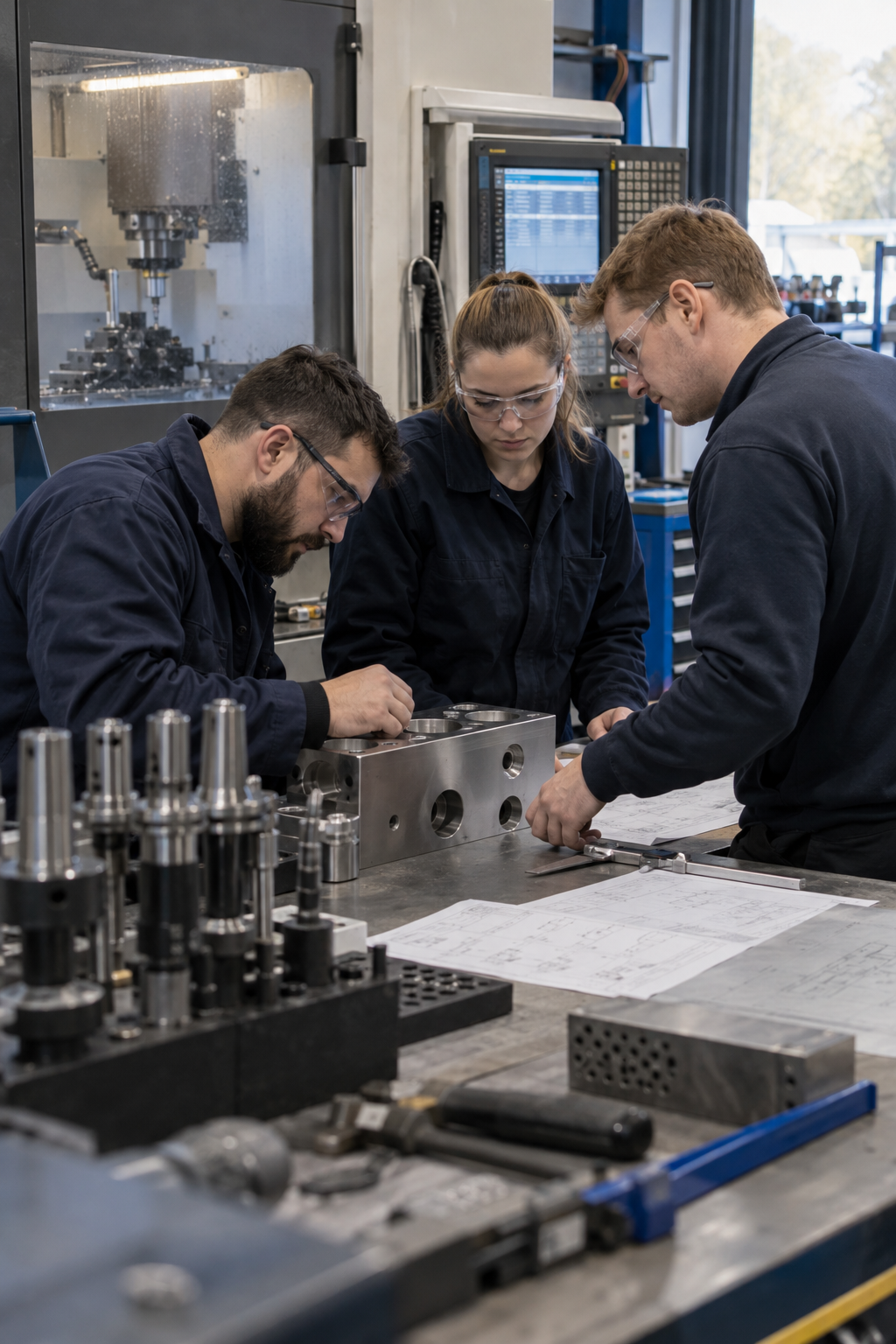
Shop-floor experience changes the conversation.
DBIM's approach comes from working inside operational businesses, where safety, quality, environmental performance and improvement have to coexist with production, customers, people and commercial pressure.
We understand operational pressure.
Engineering businesses still need to manufacture, repair, fabricate and deliver. The answer can't simply be to stop work every time something becomes difficult.
We start with the work.
Before writing another procedure, we want to understand the task, equipment, people and process the procedure is supposed to control.
We involve the people doing it.
Engineers, operators and supervisors often know where the practical weaknesses are. Good systems use that knowledge rather than working around it.
We don't sell paperwork.
Documentation has a purpose, but more documents don't automatically mean better control. If something doesn't improve understanding, consistency, evidence or risk control, it's worth asking why it exists.
We build capability.
The aim isn't to make an engineering business permanently dependent on a consultant. It's to strengthen understanding, ownership and capability inside the business.
Practical without lowering the standard.
Practical doesn't mean taking shortcuts. It means understanding what the requirement is trying to achieve and finding a proportionate way of achieving it that works in the real operation.
And where specialist expertise is needed, we'll say so. DBIM isn't interested in pretending one consultant can be the expert in every machine, process or technical discipline. Good advice includes knowing when another competent specialist needs to be involved.
Tell us what's happening on the shop floor.
You don't need to know which service you need or have the problem completely figured out before getting in touch.
Tell us what's happening, what's causing concern or what you're trying to improve. We'll give you a practical view of where we'd start and whether DBIM is the right fit.
Talk to DBIM →No hard sell. No unnecessary consultancy. Just a straightforward conversation about what your engineering business actually needs.