Waste Management Redesign From disposal to resource.
Redesigning how waste was separated, reused, recycled and ultimately removed from the business.
The project moved waste management beyond simply arranging collections and disposing of material.
Waste streams were separated more effectively, dedicated containers and clearer controls were introduced, and opportunities to reuse IBCs, rework suitable material and recycle segregated waste became part of the operational approach.
Alongside those changes, improved waste reporting provided greater visibility of what was being recycled, recovered and ultimately sent to landfill.
Manufacturing
Waste Management Redesign
Segregation · Reuse · Recycling
Waste Hierarchy
Recycling · Recovery · Landfill
Not all waste is the same. So it shouldn't all be managed the same way.
Moving beyond disposal
The opportunity was to look beyond the collection bin and understand what was actually leaving the business. Different materials presented different opportunities for reduction, reuse, rework, recycling and recovery before landfill needed to be considered.
01
Separate the streams
Materials needed clearer segregation at source so recyclable, recoverable and specialist waste did not automatically become part of a general mixed-waste stream.
02
Find value before disposal
Some materials and containers could potentially be reused, cleaned or reworked. The challenge was to identify those opportunities before treating something as waste requiring external disposal.
03
Make segregation practical
Better waste management had to work where waste was actually produced. Clear containers, labelling, responsibilities and employee understanding were therefore as important as the waste-provider arrangement.
04
Measure the destination
Better reporting was needed to understand where material ultimately went, distinguishing recycling and recovery from the small proportion that could not avoid landfill.
The opportunity
Stop asking only, “How do we dispose of this?” and start asking, “Does it need to become waste at all?”
The aim wasn't simply to empty bins more efficiently. It was to reduce what needed disposing of in the first place.
Better waste outcomes start before anything reaches the skip.
Separate first
The waste system was redesigned around clearer segregation where materials were actually generated. Different waste streams could then follow different routes for reuse, recycling, recovery or specialist treatment rather than becoming part of one general waste stream.
Paper & card
Separated to protect recyclable material from contamination.
Plastics
Identified separately where material could enter an appropriate recycling route.
Dry mixed recycling
A dedicated route for suitable recyclable materials generated across the site.
Food waste
Kept separate from general and recyclable material.
Product waste
Controlled separately so suitable material could be considered for rework before disposal.
Washings & liquids
Managed separately from solid waste and general recycling streams.
Specialist waste
Waste requiring a controlled or specialist route remained clearly identifiable.
General waste
Used for material that could not reasonably enter a more appropriate separated stream.
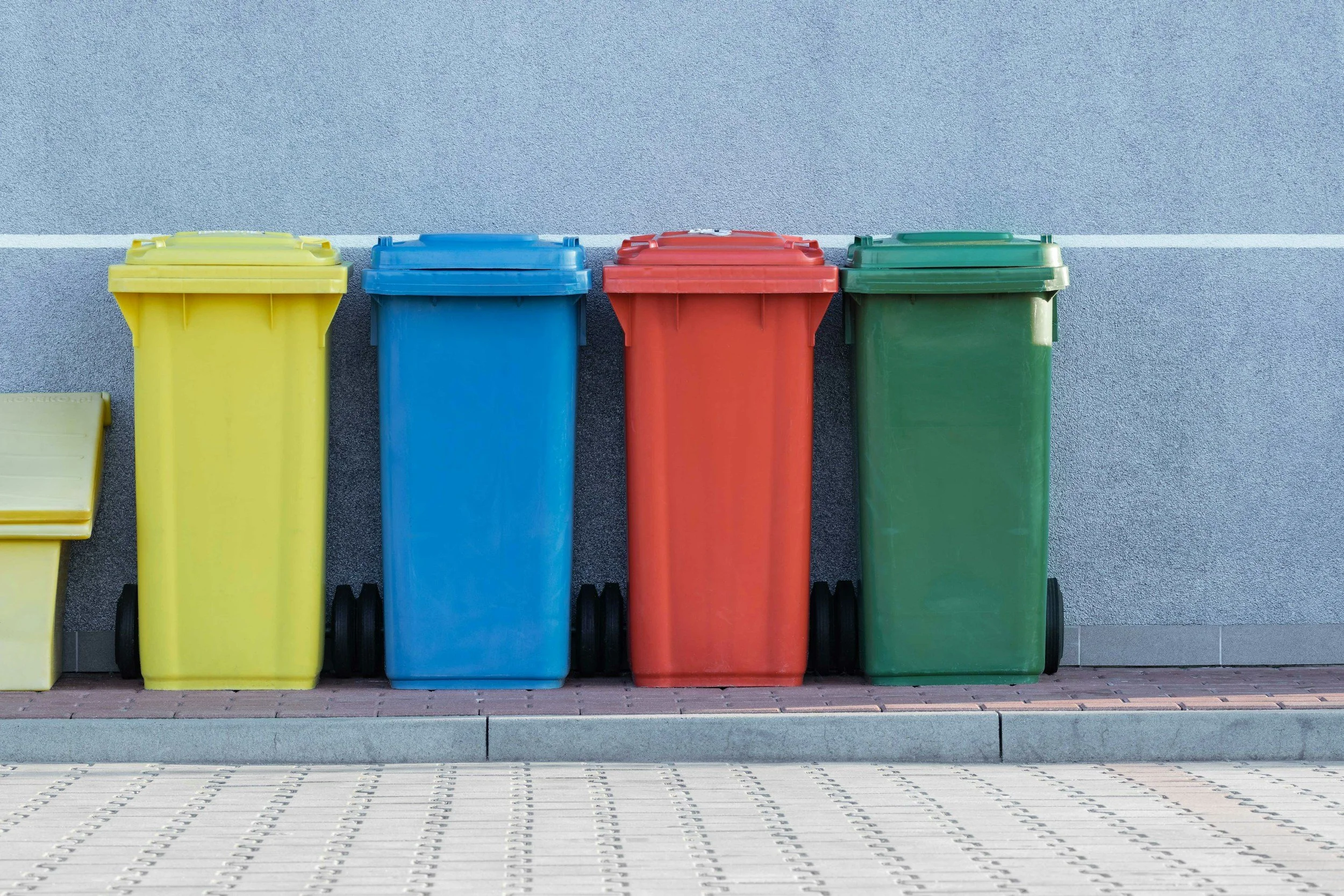
Dedicated bins
Separate containers positioned around the site for identified waste streams.
Clear labelling
Visible identification helped employees understand what belongs where.
Waste champions
Local ownership helped reinforce the new system across everyday work.
Audit & feedback
Waste arrangements could be checked, discussed and improved rather than simply introduced once.
Segregation made the next decision easier: reuse it, recycle it, recover it or dispose of it only when necessary.
Before something became waste, could it be used again?
Moving waste up the hierarchy
Segregation opened up another opportunity: deciding whether material or packaging actually needed to leave the business. Suitable product could be assessed for rework, while IBCs could be cleaned, controlled and reused where their condition and intended purpose allowed.
Segregate
Keep potentially reusable material separate so the opportunity is not lost through contamination or mixing.
Assess
Check suitability and condition before deciding whether material can safely return to use.
Clean or rework
Prepare suitable containers for reuse and, where appropriate, assess segregated product for controlled rework.
Return to use
Keep useful material and packaging within the operational cycle rather than automatically sending it into an external waste stream.
Waste product wasn't always wasted product.
Suitable segregated product could be checked before disposal. Where it met the required conditions, the material could be assessed for controlled rework back into production rather than leaving the business as waste.
Wash, control and reuse where possible.
IBCs were managed according to condition and intended use. Containers requiring cleaning could be identified and held back from reuse until the cleaning process was completed, while other containers could remain within appropriate internal uses.
Waste hierarchy in practice
Every tonne kept in use internally is material that doesn't immediately need recycling, recovery or disposal.
The first question became less about where waste should go and more about whether it needed to leave at all.
Better segregation changed where the waste ended up.
Follow the material
Waste-provider reporting made it possible to look beyond the number of bins collected and understand the eventual destination of different waste streams. Defined reporting periods showed strong diversion from landfill, with material instead moving through recycling and recovery routes.
Defined Reporting Period
35.98t
Zero tonnes to landfill
Across this documented waste-reporting scope, the full 35.98 tonnes were diverted from landfill.
Wider Reporting Scope
46.57t
100% landfill diversion
A further multi-waste report documented 46.57 tonnes with zero tonnes recorded as going to landfill.
Broader Dataset
0.081t
Landfill became residual
Against 162.09 tonnes across identified waste categories, only 0.081 tonnes were recorded to landfill within this broader reporting dataset.
Where material went
Diversion did not mean one single destination.
The reporting distinguishes recycling and recovery routes across multiple material streams. Paper and cardboard, plastics, dry mixed recycling, food, liquid waste and other separated streams could therefore follow more appropriate routes than simply being sent to landfill.
The result wasn't simply fewer general-waste collections. It was a shift in what happened to material after it left the site.
Collection wasn't the end of the process. The destination mattered too.
Looking beyond the skip
Improving segregation on site was only part of the solution. The waste-provider relationship also needed to support appropriate recycling and recovery routes while providing clearer information about what ultimately happened to the material collected.
Segregate
Keep useful waste streams separate at source so downstream recycling opportunities are protected.
Collect
Match collection arrangements to the waste streams being generated rather than relying only on general waste.
Recover value
Move suitable material through recycling or recovery routes instead of treating landfill as the default destination.
Report
Use waste reporting to understand tonnage, material streams and final destination so future decisions can be evidence-led.
Know what happens after collection.
Waste reports provided greater visibility of material type, tonnage and destination. This made it possible to distinguish genuine landfill diversion from simply knowing that waste had been collected.
Use the data to improve the next collection.
Reporting could then feed back into decisions about segregation, container arrangements and which streams needed further attention, turning the provider relationship into part of the improvement cycle.
Evidence-led waste management
Reporting connected the site changes to the actual waste destination.
The documented waste reports distinguish material streams and their treatment routes, including recycling, recovery and landfill. That provided the evidence used to demonstrate high landfill diversion across defined reporting periods.
A waste collection tells you what left the site. Good waste reporting tells you what happened next.
New bins were only useful if people used them properly.
Turning the system into routine
The waste redesign needed to work during normal production, cleaning and everyday site activity. That meant making segregation easy to understand, giving people clear responsibilities and creating ways to check whether the new arrangements were actually being followed.
01
Clear labelling
Waste containers were identified so employees could make the right segregation decision where waste was generated, rather than relying on sorting later.
02
Employee responsibility
Waste segregation became part of everyday responsibility, helping move environmental control closer to the people generating and handling the material.
03
Waste champions
Waste champions provided local ownership and helped reinforce the new arrangements across normal site activity.
04
Training & awareness
Employees needed to understand both where material belonged and why segregation mattered to reuse, recycling and landfill-diversion performance.
05
Waste audits
Routine checks created a way to identify contamination, incorrect segregation or weaknesses in the arrangement before they became established habits.
06
Feedback & adjustment
Findings could be fed back into container positioning, communication, training and future waste-management decisions.
The everyday cycle
A simple system people could see, use and improve.
Why it mattered
Better waste performance came from combining infrastructure with behaviour: the right containers, in the right places, used in the right way.
The waste system became something employees participated in, rather than something managed only after the material left the site.
Waste reduction starts long before the waste contractor arrives.
Treat waste as a resource problem
The project demonstrates that stronger waste performance comes from looking at the whole material journey. What is purchased, used, left over, separated, reused and disposed of all influence the environmental outcome long before a collection takes place.
01
Understand the streams
Waste data becomes more useful when individual materials are visible. Separating paper, plastics, product waste, liquids, food and specialist streams creates better opportunities for action.
02
Segregate where waste starts
Dedicated containers, clear labels and employee ownership protect recyclable and reusable material before contamination or mixing removes those options.
03
Reuse before disposal
Containers and suitable material should be assessed before automatically entering an external waste stream. Cleaning, controlled reuse and product rework can keep resources in productive use for longer.
04
Measure the destination
Collection volumes alone do not show environmental performance. Recycling, recovery and landfill data provide a clearer picture of what actually happens after materials leave the site.
05
Keep improving the system
Waste champions, training, audits and feedback help identify contamination, poor segregation and new opportunities rather than allowing the initial redesign to become static.
The management approach
Keep material as high up the waste hierarchy as reasonably possible.
The real outcome
A waste system built around resource use, segregation and evidence rather than simply arranging disposal.
Waste Management Redesign · Manufacturing · Resource Improvement
What is your waste really costing you?
Waste isn't only a disposal cost. It can represent lost material, unnecessary purchasing, inefficient processes and resources leaving the business before their useful life is finished.
Reduce · Reuse · Recover
Reduce what becomes waste. Keep materials in use for longer. Improve what happens to the rest.